
Best Wellness Gadgets Worth Buying on a Budget in 2026 Leave a comment
Wellness spending no longer has to mean premium pricing, a subscription stack, and a drawer full of gadgets that looked good in an ad but rarely get used. In 2026, the strongest budget buys are much simpler. They target common needs, offer measurable features, and fit into daily life without asking for a total routine overhaul.
That practical approach matters because the need is real. The CDC reported in 2026 that 30.5% of U.S. adults in 2024 slept less than 7 hours on average in a 24-hour period. The same report found that 15.4% had trouble falling asleep and 18.1% had trouble staying asleep. If a low-cost gadget can help with sleep, recovery, or better self-tracking, it is not just a trendy purchase. It can be a smart one.
Why budget wellness gadgets are worth buying in 2026
The best low-cost wellness gadgets do one thing very well: they reduce friction. They make healthy behavior easier to repeat. A sound machine can create a more stable bedtime environment. A smart scale can turn vague intentions into visible trends. A percussion massager can make recovery more convenient after training or long workdays.
There is also a big difference between “cheap” and “budget-friendly.” Cheap gadgets often rely on novelty. Budget-friendly gadgets tend to win on function. They may not have luxury finishes or advanced sensors, but they often include the features that matter most.
A good buy in this category usually checks a few boxes:
- It solves a common problem: sleep quality, stress, muscle soreness, or daily tracking
- It has a measurable feature set: timer, brightness level, app sync, multi-speed control
- It fits your routine: bedside, desk, gym bag, kitchen counter
- It does not create extra work: difficult setup, confusing data, or constant charging
Best budget wellness gadgets by category
A quick side-by-side view makes the value picture much clearer.
| Gadget category | Budget range | Features that matter most | Best for |
|---|---|---|---|
| Portable sound machine | Around $20 to $30 | White noise or nature sounds, timer, portability | Sleep support, travel, shared spaces |
| Smart nutrition scale | Around $20 to $30 | App connectivity, nutrition database, unit conversion | Portion tracking, meal prep, macro tracking |
| Basic smart body scale | Around $20 to $50 | Weight trends, app sync, multi-user support | Habit tracking, long-term progress |
| Percussion massager | Around $30 to $60 | Multiple speed settings, attachment heads, battery life | Recovery, post-workout muscle relief |
| Light therapy lamp or box | Often $40 to $100 on sale | 10,000 lux, stable stand, comfortable positioning | Dark mornings, seasonal mood support |
The strongest values tend to come from gadgets that help you repeat a behavior every day. That is why sleep tools and tracking tools often beat flashy one-use devices.
Budget sleep gadgets that actually earn a spot on your nightstand
Sleep is still the clearest starting point for most people. When nearly one-third of adults are not reaching the 7-hour mark, budget sleep gadgets have a very wide lane.
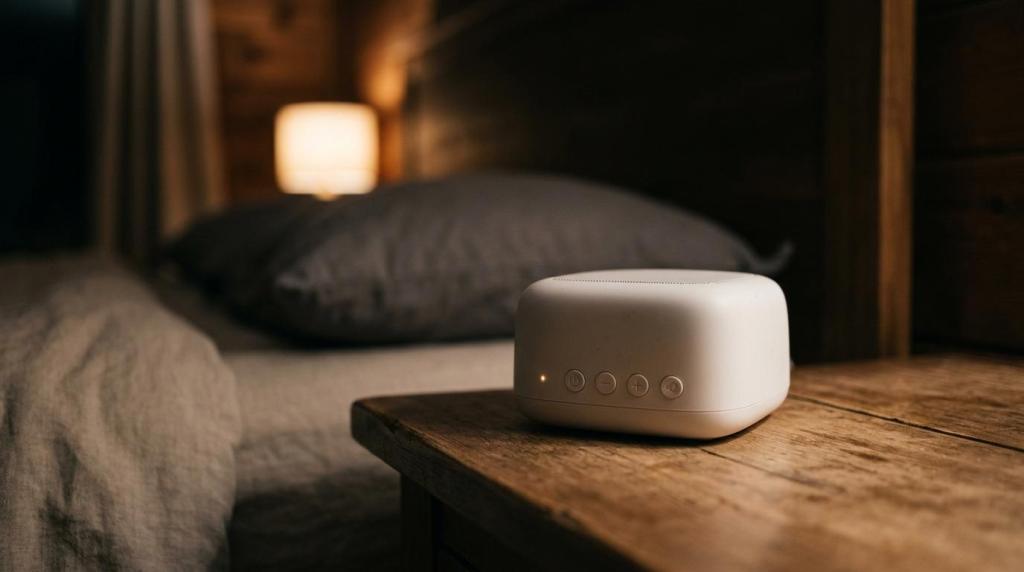
One of the most practical picks is a small sound machine. A budget model can still cover the essentials without trying to become a smart home hub. The HoMedics SoundSpa Mini Portable Sound Machine, priced at $21.99 on its product page, is a good example of what this category should look like. It includes four digitally recorded sounds: white noise, summer night, ocean waves, and rain. It also offers 15-minute, 30-minute, and 45-minute auto-off timer options, plus battery-powered portability.
That feature mix matters more than branding. A sleep gadget should support a better environment, not add complexity. If you live near traffic, share a room, or travel often, a compact sound machine can produce a bigger quality-of-life gain than a more expensive wearable.
A few sleep gadget features are especially useful:
- White noise
- Auto-off timer
- Battery or USB portability
- Simple controls
- Low light or no bright display
If you want to spend carefully, skip products that bundle too many extras into the sleep category. Sunrise alarms, Bluetooth speakers, meditation content, and sleep coaching can all sound appealing, but many buyers get more value from one dependable sound machine and a consistent bedtime routine.
Light therapy gadgets on a budget need the right specs
Light therapy is one of the few wellness gadget categories where technical details matter enough to affect whether the product is useful. This is not a space where the cheapest glowing lamp should win.
According to the NCCIH, seasonal affective disorder is a type of depression with symptoms that most often start in late fall or early winter and lift in spring and summer. The agency states that light therapy for SAD typically requires sitting 20 to 60 minutes each morning in front of a light box from early fall until spring. It also notes that several studies found beneficial effects similar to medication or cognitive behavioral therapy.
That means shoppers should pay close attention to brightness and use case. When comparing light therapy devices, 10,000 lux is a key benchmark to look for. A stylish desk lamp with warm ambient light may look great in a product photo, but it does not automatically qualify as a light therapy box.
Here is where budget shopping needs discipline:
- Check the stated brightness: 10,000 lux is the benchmark many shoppers look for
- Check the intended distance: brightness claims often depend on how close you sit
- Check the form factor: a stable light box is usually more useful than a decorative lamp
- Check the timing fit: morning use for 20 to 60 minutes should be realistic in your routine
Light therapy devices can be a very smart purchase, though they deserve more care than impulse buys. Anyone considering light therapy for depression symptoms should talk with a qualified clinician, especially if symptoms are persistent or severe.
Smart scales make budget wellness more measurable
Wellness often improves once people can see patterns. That is why scales remain popular, though the best budget pick depends on what you want to track.
A body scale focuses on long-term trend awareness. Many now offer app syncing and body composition estimates through bioelectrical impedance analysis. Those extra metrics can be useful for motivation, though they should be treated as directional rather than perfect lab-grade readings. A higher-spec example, the eufy Smart Scale P2 Pro, lists 16 body measurements including weight, body fat, BMI, muscle mass, bone mass, water, protein, and heart rate, along with Wi-Fi and Bluetooth syncing and temporary storage for up to 100 readings.
Still, if the goal is value, a nutrition scale may be the sleeper pick in this category.
The RENPHO Calibra 1 Smart Nutrition Scale is listed at $21.99 and includes app connectivity plus 25 nutritional analysis functions. For buyers focused on meal prep, calorie awareness, or macro consistency, that can be more actionable day to day than a pricier body scale. It helps turn “I’m eating healthier” into visible numbers.
The best choice depends on your style:
- Choose a body scale: if weekly trend tracking keeps you engaged
- Choose a nutrition scale: if food awareness is the bigger missing piece
- Choose both later: if you want a fuller picture without overspending all at once
This category also shows a simple truth about budget wellness: the most useful gadget is often the one that changes your behavior fastest.
Recovery gadgets under $30 can still be impressive
Recovery no longer belongs only to serious athletes. Desk workers, commuters, parents, and frequent travelers all feel the effects of tight shoulders, sore calves, and stiff backs. That makes the percussion massager one of the most practical budget wellness buys around.
A good example is the HoMedics Essential Percussion Massager, priced at $29.99 on its product page. It lists six speed settings, four attachment heads, and up to two hours of use on a full charge. That is a solid package for the price, especially for a category that used to sit much higher on the cost ladder.
This kind of device works well because the benefit is immediate. You do not need months of data to know whether you are using it. You feel the difference in the moment, and that reinforces the habit. For many people, that alone justifies the spend.
When comparing budget percussion massagers, pay attention to a few basics. Speed range matters more than flashy design. Attachment variety is useful if you plan to use it across larger and smaller muscle groups. Battery life matters if you do not want another gadget that is always dead when you need it.
How to avoid overbuying in the wellness gadget category
The wellness market is full of products that feel productive before they actually prove useful. The smartest budget strategy is to buy by problem, not by trend.
Start with the bottleneck that affects your daily life the most. If your sleep is inconsistent, begin there. If your meals are chaotic, get a nutrition scale. If training soreness or work tension is the bigger issue, a massager may return more value in the first week.
This simple filter helps:
- Ask one direct question: what repeated problem am I trying to fix?
- Set a small cap: many of the best starter gadgets live under $30
- Look for repeat use: daily or weekly use beats novelty
- Ignore feature overload: extra modes are meaningless if you never touch them
A smart budget setup is often built in layers, not all at once. One sleep tool, one tracking tool, and one recovery tool can cover a lot of ground.
What the best wellness gadget deals usually have in common
The strongest deals in 2026 tend to share a pattern. They offer a high utility-to-price ratio, they serve a common need, and they do not depend on a subscription to unlock their value.
That is especially true in four areas:
- Sleep support
- Light exposure support
- Nutrition and body tracking
- Muscle recovery
There is also a style point worth mentioning. Many shoppers want gadgets that look calm, minimal, and good enough to leave out on a nightstand or kitchen counter. That preference is not shallow. It often increases use. A product that fits your space tends to stay visible, and visibility supports consistency.
A smarter way to build a budget wellness setup
A strong budget wellness lineup does not need to be large. It needs to be intentional. A $21.99 sound machine can improve bedtime conditions. A $21.99 nutrition scale can sharpen meal choices. A $29.99 percussion massager can make recovery easier to maintain. A well-chosen light box can support darker mornings when timing and brightness meet real use needs.
That is the quiet advantage of shopping this category well. You do not need luxury pricing to get helpful features. You need products that solve a real problem, earn repeat use, and feel good enough to keep within reach every day.
