
7 Second Acts That Aren’t Jetty: New Under-The-Radar Brands From Experienced Entrepreneurs Leave a comment
Poppi founders Allison and Stephen Ellsworth are among the highest-profile consumer entrepreneurs embarking on a second act with their new venture, Jetty, but they’re far from alone. Founders who have already launched brands are returning to entrepreneurship, armed with hard-won lessons, established industry connections and, in some cases, proceeds from previous exits.
What draws them back? For Bill Glaab, who sold personal care brand Hand in Hand in 2021 to Bain Capital Double Impact and has since launched head lice treatment brand Mayday, molding a brand from scratch is addictive. “It’s awesome and horrible and then awesome the next minute,” he says. “There’s a high you get from doing it.”
With Hand in Hand shuttered, Glaab is also on a mission to validate his track record as an entrepreneur. He says, “I did want to prove to myself that I could do it again, that I could build a successful brand from nothing into something worthy of being acquired.”
But even seasoned entrepreneurs aren’t guaranteed success, particularly in a cutthroat consumer market. Some are entering entirely new categories, and others are applying their expertise to familiar territory, often with different ideas about how to run a successful business.
Beyond the headline-grabbing second acts of well-known entrepreneurs, including beauty industry figures Bobbi Brown, Ju Rhyu, Wende Zomnir, Carisa Janes, Jen Atkin, Nancy Twine, Susan Yara, Jerrod Blandino and Jeremy Johnson, here are seven lesser-known ventures from experienced founders that have caught our attention.

Mayday
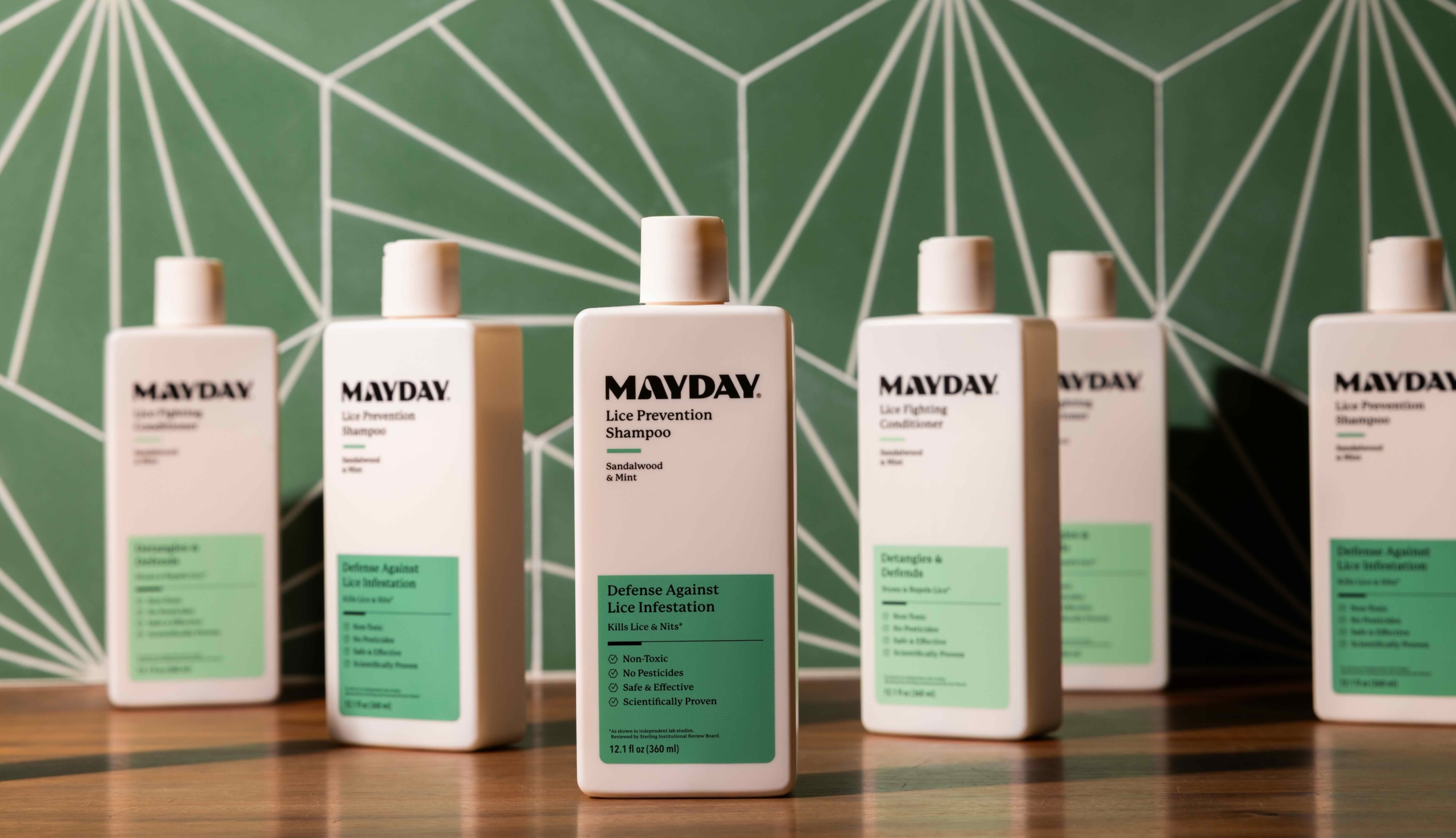
When Glaab’s two young daughters got head lice, he headed to the drugstore for a treatment. What followed was a miserable experience. One daughter developed a rash, the lice persisted and the family ended up spending more than $800 on professional treatment. The ordeal led Glaab to identify a gap in the lice treatment market for products combining natural ingredients with scientific evidence of efficacy.
Mayday is his effort to fill that gap. Glaab spent a decade building Hand in Hand with his wife Courtney Apple. The social impact-focused personal care brand reached some 15,000 retail doors, including Target, Walmart and CVS, but continually lost money as its founders reinvested in growth, teaching Glaab expensive lessons about the economics of consumer products.
“You have to be able to compete at mass retail. From a business perspective, we needed to have the margin,” says Glaab. “When Hand in Hand started, I didn’t know what margin was actually required.”
He’s applying those lessons to Mayday, a pesticide-free lice prevention and treatment brand he launched in June 2025 with Jimmy Placa, owner and president of Davion, a contract manufacturer that helps it considerably reduce cost of goods. Mayday operates under Omniche, a parent company established to develop consumer brands, though there are no immediate plans to launch another brand. The partners invested $1 million of their own money in Mayday and recently secured a $2.5 million bank credit line. The brand expects to exceed $2 million in revenue this year and roughly break even.
Set to debut at retail early next year, Mayday has quickly risen on Amazon, where its shampoo and conditioner bundle ranks No. 2 in Lice Shampoos & Rinses and sells approximately 3,600 bundles monthly, according to Glaab. Its detangler sells another 2,200 units monthly. Overall, Mayday’s six-product assortment spans shampoos, conditioners, detanglers, lice treatments and home sprays, with products priced from around $16 to $38.
The brand emphasizes science-backed efficacy, citing independent, company-sponsored laboratory testing that found its shampoo and lice treatment achieved 99% mortality against pesticide-resistant lice. Its packaging reinforces that scientific approach, eschewing the cutesy imagery often associated with lice products in favor of a more serious aesthetic. Glaab sees opportunities for Mayday beyond lice prevention and treatment in adjacent categories such as insect repellents.

Cartwheel
Not every lesson from a founder’s first venture translates to the second. Just ask Joanna Shu. As founder and CEO of consumer health company Cartwheel, Shu is discovering that some of the experience she gained guiding her earlier brand, Refresh Skin Therapy, and getting its products into Costco, Sam’s Club, Walmart and Rite Aid may actually be a liability. Shu spent more than a decade building Refresh Skin Therapy before departing in 2023, when her former business partner, Yaniv Ophir, took over.
“The e-commerce landscape has changed so dramatically with AI, social commerce and TikTok Shop,” says Shu. “I work hard to cultivate a beginner mindset and commit to learning the new platforms and tools.”
Like Glaab, Shu was inspired to enter the lice treatment market by her children’s experiences with head lice. Cartwheel’s first brand, pesticide-free lice treatment specialist Nit Happens, launched in January and entered roughly 6,000 Walgreens stores in March with its $34.99 lice treatment kit, which includes a treatment gel, shampoo and lice removal tools. In a clinical study involving 26 participants, 89% were lice-free after following the treatment protocol.
Nit Happens introduced School Day Spray in June, and Cartwheel recently received App Store approval for Lice Lens, an AI-powered app designed to help parents identify head lice. A wound care gel containing antimicrobial silver is next. Nit Happens has generated $425,000 in sales through October.
Cartwheel has raised just under $1 million. The company got its start in the accelerator Health Wildcatters, which provided its first investment, and subsequently attracted backing from Aggie Angel Network, North Texas Angel Network and LvlUp Ventures. It’s currently raising a $1 million seed round, approximately 30% of which has closed, to support national awareness of Nit Happens.
For Shu, lice treatment is an entry point into a much larger opportunity in the consumer health segment focused on first aid for families. “Our thesis [is] that ‘better for you,’ while table stakes in food and skincare, has barely touched first aid and OTC,” she says. “But it’s the same parent who is choosing Poppi over Pepsi, as an example, why would that not be true in consumer health products as well?”

Milou
There are plenty of similarities between naturopath and nutritionist Libby Boxall’s first brand, Dose & Co, and her second, Milou. Both are New Zealand-born with a focus on skin health, and both launched with an initial investment of around $40,000. But there are some important differences, too.
In her second go-round, Boxall has evolved her mindset. “I’m much more decisive now,” she says. “I know where to invest my time, what to prioritize and when to trust my own judgement.” She adds, “I’ve also learned that a great product is only part of building a successful brand. Building trust, creating a loyal community and developing products customers love and keep coming back to are just as, if not more important.”
Launched in 2024, Milou combines topical skincare with ingestible beauty products, an approach Boxall and co-founder Bailee Wilson-Pledger, who has a background in marketing and public relations, envisioned from the outset. Priced primarily from $40 to $60, the brand started with skincare before branching into supplements with the introduction of its Cellular Beauty range last month, including Beauty Electrolytes. According to Boxall, Milou sold through six months’ worth of projected inventory for Cellular Beauty within its first month on the U.S. market.
“I think there’s a significant opportunity in the beauty supplement category, particularly for products that women can easily incorporate into their daily routines,” says Boxall. “We’re one of the early brands to market with an electrolyte that goes beyond traditional hydration, combining electrolytes with collagen, hyaluronic acid, and vitamin C to support skin health.”
While Dose & Co, now owned by brand holding company Vector Consumer, became part of ZURU Edge and attracted investment from Khloé Kardashian before landing in major U.S. retailers, Boxall and Wilson-Pledger have funded their venture themselves, reinvesting in the business as they expand into the United States, where they’re currently selling direct-to-consumer.
Boxall runs Milou from Minneapolis, and Wilson-Pledger oversees the business in New Zealand. Milou is currently in discussions with potential retail partners in both countries and is eyeing further expansion into Australia. Six additional Cellular Beauty products are planned for 2027.

Photo51
Jemma Kidd made a name for herself with approachable makeup techniques and complexion-enhancing cosmetics. Now, more than a decade after her namesake beauty brand fell into administration following a stint at Target, the British makeup artist has returned to entrepreneurship with the ambitious undertaking of helping consumers understand how their bodies age.
Launched in the United Kingdom this month, Kidd’s new company, Photo51, offers genetic and epigenetic testing designed to deliver insights into consumers’ health and biological aging. Its Gene Roadmap test uses a cheek swab to examine inherited genetic characteristics associated with areas such as nutrient metabolism, stress response and cellular repair. Its BioAge test uses a finger-prick blood sample to analyze DNA methylation markers and estimate biological age and the pace of aging. The tests are priced from approximately $460 to $725.
Photo51 has established a presence at London pharmacy John Bell & Croyden, where customers can examine the tests and book private appointments with advisers who explain the testing process and assist with sample collection. Appointments can be booked online or through an in-store QR code. Test results and personalized lifestyle recommendations are delivered through an app.
Photo51 grew out of Kidd’s own struggles with persistent fatigue, lethargy and low mood despite maintaining what she considered a healthy lifestyle. According to the company’s website, a methylation test eventually provided insights she hadn’t gained through years of trial and error. On Instagram, Kidd shared that testing revealed her body wasn’t efficiently converting folate. “I finally understood what my body was trying to tell me,” she wrote.
Photo51’s scientific advisory board is chaired by Jean-Marc Sobczyk, whose background spans genomics, methylation biology and longevity science. The company’s name pays tribute to Photograph 51, the groundbreaking X-ray image captured by British scientist Rosalind Franklin and her student Raymond Gosling in 1952 that was instrumental in revealing DNA’s double-helix structure.
Kidd is trying her entrepreneurial hand in a genetic testing market that has had a checkered past, including the 2025 bankruptcy of industry pioneer 23andMe. Photo51 has a distinctive slant on genetic testing, with a focus on longevity and a premium price point. It’s banking on consumers’ willingness to spend hundreds of dollars to understand how and why their bodies are changing over time.

Ulo
Serial entrepreneur Deep Patel has a knack for spotting hot consumer categories. After building and selling brands in CBD and men’s grooming, he’s setting his sights on what’s happening on top of people’s heads.
Ulo, a telehealth hair loss company that launched last year, is Patel’s latest entrepreneurial endeavor. It offers prescription and over-the-counter treatments addressing thinning hair and promoting regrowth. Ulo’s customizable topical formulations combine ingredients such as minoxidil, finasteride, dutasteride, caffeine and melatonin. It also sells oral medications and nonprescription hair growth serums, shampoos and supplements.
Prescription treatments start at $24 a month for oral finasteride and $54 for topical minoxidil, with discounts available for longer-term plans. Ulo identifies oral dutasteride, a medication prescribed off-label for hair loss, as one of its bestsellers. Customers complete an online medical assessment, and licensed providers determine whether prescription treatments are appropriate before they’re shipped to customers.
In 2019, Patel founded Penguin, a DTC CBD brand that he sold to Verma Farms in 2021. He used proceeds from the sale to finance men’s grooming brand Blu Atlas, which he sold to Foundry Brands in 2023, roughly 18 months after its debut. The transaction was valued at an undisclosed eight-figure sum.
The idea for Ulo came partly from Blu Atlas customers who approached Patel with questions about hair loss. In a May 2025 interview with The Business of Storytelling, he explained that, although Blu Atlas sold haircare products, they weren’t intended to regrow hair. He saw an opportunity to offer treatments online, particularly for men reluctant to visit a doctor in person about hair loss.
Rob English, a hair loss researcher who founded consumer advocacy and education platform Perfect Hair Health in 2014, is Patel’s partner in Ulo. English has published peer-reviewed research on hair loss disorders and helped develop Ulo’s products, including selecting ingredients, developing formulations and identifying manufacturers. Perfect Hair Health also brought an established audience of consumers interested in hair regrowth.
Ulo is operating in a fiercely competitive telehealth hair loss market, where it’s up against established players such as Hims, Ro and Keeps. It’s seeking to distinguish itself through customizable formulations, including low-dose prescription treatments and nonhormonal options. Patel’s consumer brand-building experience and English’s background in hair loss research could give it an edge as it works to gain traction.

Maeva
For many wellness entrepreneurs, the motivation to start a business is both personal and professional. Steven Neiger is no exception. His experience taking GLP-1 medications inspired Maeva, a nutrition and supplement brand he launched with his brother Dean Neiger in January. It doesn’t hurt that GLP-1-related supplementation is an emerging category attracting interest from consumers, retailers and investors alike.
The brothers have an intertwined entrepreneurial history. In 2015, they founded Sky Organics, a natural and organic beauty and personal care brand that got its start on Amazon before expanding into major retailers, including Walmart, CVS and Whole Foods. Private equity firm Nexus Capital Management made a strategic growth investment in Sky Organics in 2021, and the brand merged with MAV Beauty Brands in 2024.
Maeva’s assortment includes nutrition shakes formulated separately for men and women, functional boosters targeting beauty, energy and gut health, and electrolyte products. The shakes contain 20 to 25 grams of plant-based protein per serving, with the women’s formula incorporating collagen, hyaluronic acid and biotin and the men’s formula featuring ashwagandha and creatine.
Registered dietitian Ashley Koff advised on product development. Available through a subscription-first DTC model, Maeva’s shakes are priced at $69, boosters at $19.99 and electrolytes at $24.99.
Maeva is among countless brands capitalizing on the protein craze. Ultimately, the winners in the category will be those that earn a place in consumers’ daily routines through taste, performance and convenience. So far, early customer reviews of Maeva have been largely positive, particularly when it comes to taste and convenience.
Maeva raised $1.8 million in pre-seed funding late last year, according to funding database VCBacked. Its backers include IgniteXL Ventures, which has Bubble, Dame, Lion Pose and Musely in its portfolio, and Romain Gaillard, founder and former CEO of The Detox Market.
In a statement announcing Maeva’s launch, Claire Chang, founding partner of IgniteXL Ventures, emphasized the founders’ previous entrepreneurial experience. “We invest in teams first, and the founders behind Maeva are proven builders,” she said. “They have demonstrated the discipline and execution required to take a brand from concept to scale.”

GLZD
After more than a decade selling hair extensions and wigs to women, Mikey Moran decided it was time to create something for men. The founder and CEO of Private Label, which launched in 2014, entered men’s body care in June with GLZD, a brand offering scented body glazes designed to moisturize skin, leave a subtle sheen and provide an alternative to dousing oneself in cologne.
Priced at $39 for 7.7-oz. sizes, GLZD’s body glazes contain ingredients such as squalane, mango butter and jojoba oil. The assortment comes in five scents, including Seaglass, a fresh coastal fragrance, and Saddle, a sweet musk fragrance. Retail distribution is a possibility, but the brand is concentrating on DTC for now.
Moran invested roughly $30,000 to $35,000 to get GLZD off the ground, compared with a combined $28,000 he and his business partner put into Private Label. Moran is a category-agnostic serial entrepreneur who previously founded CurrySimple, a Thai curry sauce brand that secured distribution at Whole Foods. Currency fluctuations squeezed its margins, and he shut it down around 2010.
Moran’s extensive entrepreneurial experience has made starting GLZD less intimidating. One notable difference in his approach this time is his willingness to launch before everything is perfect.
“I feel like it’s more important just to get it launched, get the products out there,” says Moran. “Every entrepreneur type of lesson that I’ve been through, I can put that into this business and not worry so much when things go wrong because things in business will always go wrong.”
Moran acknowledges GLZD’s start has been slow, but he expected that given he’s holding back on marketing investment until additional products arrive. He’s planning a women’s version of the body glaze, new packaging and complementary products, and is considering a collaboration with a reality television personality.
Moran still celebrates every Shopify order notification, even after some two decades of consumer packaged goods entrepreneurship. “Every order, it’s like the first one,” he says. “You never get sick of it.”
