
Best Recovery Tools for Sore Muscles at Home Leave a comment
Muscle soreness has a way of making even ordinary movements feel expensive. Stairs turn into a test, sitting down becomes strategic, and the next workout can look much less appealing than it did the day before.
The good news is that at-home recovery has improved a lot. You no longer need a clinic visit or a full training room to feel better. A few well-chosen tools can reduce discomfort, loosen tight tissue, and help you get back to normal movement faster. The key is choosing the right tool for the kind of soreness you actually have, instead of buying the loudest gadget on your feed.
What sore muscles at home recovery tools can really do
Most home recovery tools help with comfort, mobility, and short-term soreness. That distinction matters. A foam roller, heating pad, or massage gun may help you feel looser and less tender, but none of them can replace sleep, hydration, good nutrition, and sensible training volume.
That still makes them worth having. When used well, these tools can make recovery feel more manageable, help you keep moving, and reduce the stiffness that tends to build after hard sessions, long workdays, or a lot of time at a desk.
A simple way to think about muscle recovery tools is this:
- Pain relief
- Reduced tightness
- Better range of motion
- Less perceived heaviness
- More comfort between workouts
Best muscle recovery tools for home use
If you want the strongest mix of usefulness, ease, and value, six categories stand out. Each one solves a slightly different problem.
| Tool | Best for | Typical use time | Main benefit | Biggest caution |
|---|---|---|---|---|
| Foam roller | Large muscle groups | 1 to 2 minutes per muscle | Loosens tight areas, improves mobility | Can feel intense if you go too hard |
| Massage gun | Targeted tightness | 1 to 2 minutes per muscle | Fast relief, short-term range of motion gains | Avoid joints, spine, and excessive pressure |
| Heating pad | Tight, achy muscles | 10 to 20 minutes | Warmth, relaxation, pain relief | Burns if too hot or used too long |
| Cold pack | Swelling or sharp post-strain soreness | 10 to 15 minutes | Numbs pain, may reduce swelling | Never place directly on skin too long |
| Compression sleeves or socks | Heavy legs, post-workout fatigue | A few hours after exercise | May reduce soreness and strength loss | Poor fit can feel restrictive |
| Topical creams or gels | Small, localized sore spots | As directed, often 2 to 4 times daily | Quick symptom relief | Avoid broken skin and ingredient sensitivities |
Foam rollers for sore legs, glutes, and back muscles
Foam rollers remain one of the smartest first buys for home recovery. They are affordable, durable, and useful for the muscle groups that get sore most often: calves, hamstrings, quads, glutes, and upper back. Research points to modest but real benefits, especially for short-term soreness and mobility.
What foam rollers do best is mechanical pressure over broad areas. That makes them ideal when the whole muscle feels tight, not just one knot. If your legs feel stiff after a run or lower-body strength session, rolling for a minute or two per muscle group can make movement feel easier almost right away.
Technique matters more than intensity. Rolling slowly works better than racing through it, and more pressure is not always better. If you brace, hold your breath, or feel sharp pain, you are probably using too much force.
A medium-density roller is usually the best starting point. Very firm rollers can feel punishing to beginners, which often leads to inconsistent use.
Massage guns for targeted muscle tightness
Massage guns are popular for a reason: they are fast, satisfying, and easy to use on the exact spot that feels stubborn. Evidence suggests they may help with short-term flexibility and stiffness, especially in the calves, hamstrings, and other large muscle groups.
They shine when soreness is more focused than general. A massage gun can work well on the upper traps after a long day at a laptop, on the glutes after lifting, or on the calves after speed work. They are less useful as a cure-all and more useful as a precise recovery tool.
That precision also creates more room for user error. Pressing too hard, staying in one spot too long, or using high speed on a very tender muscle can leave you feeling worse instead of better. Start low, keep the device moving, and stay on muscle tissue rather than joints or bony areas.
A few practical guidelines make massage guns much more effective:
- Start light: low speed, light pressure, slow passes
- Stay brief: around 60 to 120 seconds per muscle group
- Target muscle tissue: quads, glutes, calves, lats, shoulders
- Avoid risky zones: spine, front of neck, joints, bruised areas
Heat therapy for tight and achy muscles
When soreness feels dull, stiff, and resistant to movement, heat is often the most comforting option in the room. Warmth helps muscles relax, and some research suggests heat can be especially effective for pain relief during the first 24 to 48 hours after exercise-related soreness.
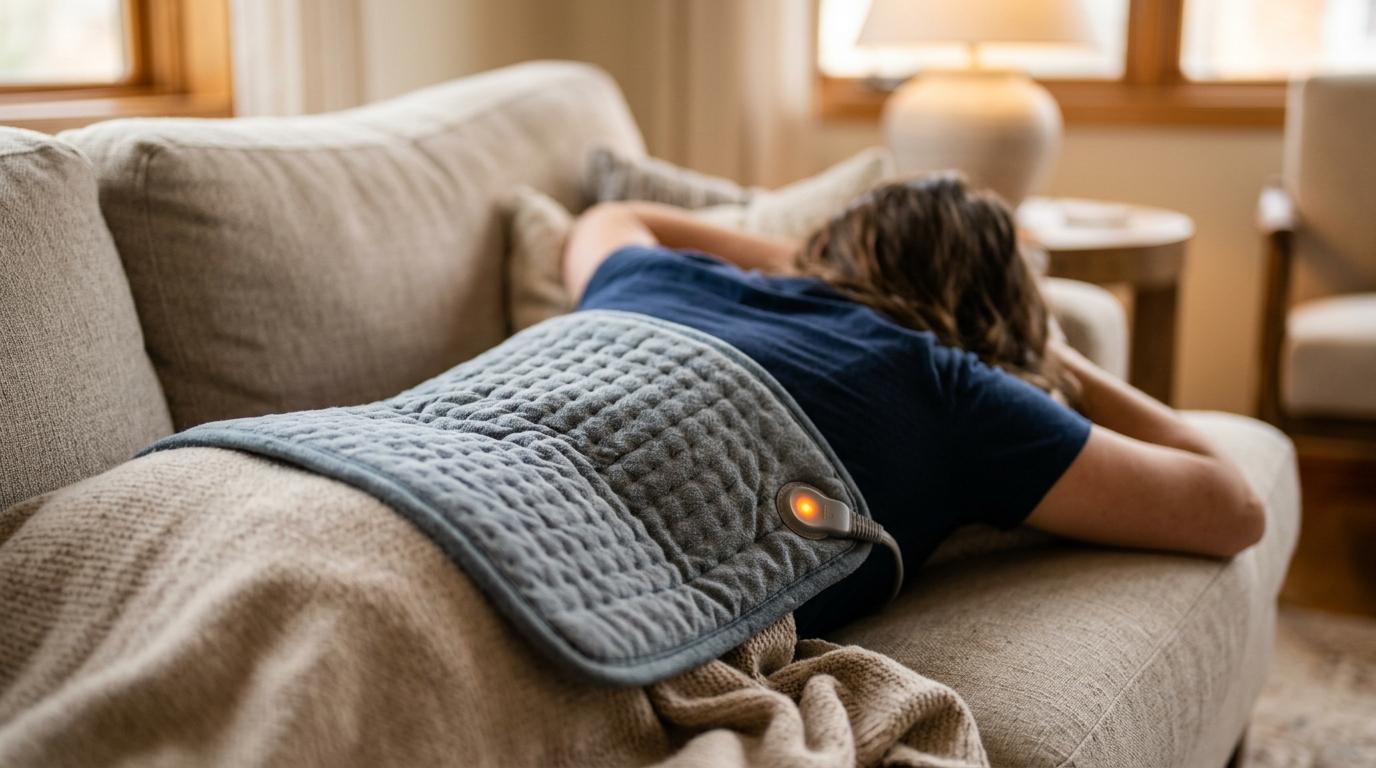
A heating pad is one of the easiest recovery tools to use because it asks very little from you. Place it over the sore area, settle in for 10 to 20 minutes, and let the tissue soften. This works well for the lower back, shoulders, hamstrings, and calves.
Heat is also one of the best low-effort tools for people who do not enjoy rollers or percussion devices. You are not forcing pressure into the muscle. You are simply creating a more comfortable environment for it to relax.
Keep the temperature moderate, use a fabric barrier if needed, and never fall asleep on an electric heating pad.
Cold therapy for swelling and post-workout pain
Cold is not as cozy as heat, but it has its place. If soreness comes with swelling, a minor strain, or that hot, irritated feeling after activity, a cold pack can help settle things down. It also works well later when you simply want pain numbing in a specific spot.
For standard delayed-onset muscle soreness, cold may not be the first thing everyone enjoys, especially if the muscle already feels stiff. Still, it can be useful for knees, ankles, shoulders, and any area where inflammation seems to be part of the picture.
Ten to fifteen minutes is usually enough. Longer is not better. Always place a cloth between the pack and your skin.
Compression gear for post-workout recovery
Compression is quieter than most recovery gadgets, though the evidence behind it is stronger than many people realize. Reviews suggest compression garments can reduce soreness and limit the drop in strength that often follows hard training.
This is especially useful for runners, lifters, travelers, and anyone whose legs feel heavy after long periods on their feet. Compression socks, calf sleeves, and tights can all help, provided the fit is correct.
The appeal is simple: put them on and keep living your life. No charging, no setup, no technique learning curve. That makes compression one of the most practical options for busy people who want recovery help without adding another ritual to the day.
Look for gear that feels supportive, not restrictive. If it leaves deep marks, causes numbness, or feels hard to tolerate, the fit is probably wrong.
Topical creams and gels for small sore areas
Topicals are the underrated workhorses of home recovery. They are not glamorous, but they can be very effective for localized discomfort. Menthol gels, warming rubs, and topical anti-inflammatory options can all reduce pain perception for a while, which is often enough to make normal movement easier.
They work especially well for the neck, shoulders, forearms, knees, and smaller sore spots that do not need a full-body tool. They are also easy to keep in a gym bag, desk drawer, or nightstand.
This category is about symptom relief, not tissue repair. That is not a weakness. Pain relief has real value when it helps you sleep better, move more naturally, or avoid turning mild soreness into guarded movement.
How to choose the right recovery tool for your soreness
The best tool depends less on trends and more on the pattern of soreness.
If your whole lower body feels beat up, broad tools make sense. If one small area is stubborn, go targeted. If you want the easiest possible recovery habit, choose something that requires almost no setup.
A practical buying filter looks like this:
- For full-leg stiffness: foam roller or compression sleeves
- For one tight knot: massage gun or topical gel
- For general achiness: heating pad
- For swelling or fresh irritation: cold pack
- For low-effort daily use: compression or heat
- For the lowest budget: foam roller, cold pack, or topical cream
Price matters too, though expensive does not always mean better. A well-made heating pad and a solid foam roller can cover a surprising amount of recovery ground for less than one premium electronic device. If you want the biggest return per dollar, start there.
A simple at-home sore muscle recovery routine
Most people do not need a 45-minute protocol. They need something realistic enough to repeat. The best routine is the one that fits into ordinary life.
Try a short sequence after training or at the end of the day. Start with 5 to 10 minutes of easy walking or light mobility to get blood moving. Then use either a foam roller or massage gun on the most affected areas. Finish with heat if the muscles still feel tight, or compression if your legs feel heavy.
One easy template works well for many people:
- Light movement for 5 minutes
- Foam roll or massage gun for 1 to 2 minutes per sore muscle
- Heating pad for 10 to 15 minutes if tightness remains
- Compression socks or sleeves for a few hours after activity
That is enough to make a difference without turning recovery into a second workout.
Safe use tips for home muscle recovery tools
Recovery tools should make soreness easier to manage, not add a new problem. A little restraint goes a long way.
Use these basic rules as your baseline:
- Sharp pain is a stop sign
- Numbness is not normal
- Bruising means back off
- More pressure does not mean more benefit
- Read the directions on any heated, cooling, or medicated product
If soreness is paired with swelling that keeps getting worse, loss of strength, joint instability, fever, or pain that does not improve after several days, it is time to stop self-treating and get medical advice.
A smart home recovery setup does not need to be huge or expensive. For many people, the best combination is a foam roller, a heating pad, and one targeted add-on like compression gear, a massage gun, or a topical gel. That mix covers broad soreness, tightness, and spot treatment without cluttering your home or your budget.
And if you are shopping with a deal-first mindset, that is a strong place to be. Recovery tools work best when they are easy to reach, easy to use, and good enough to keep using week after week.
