
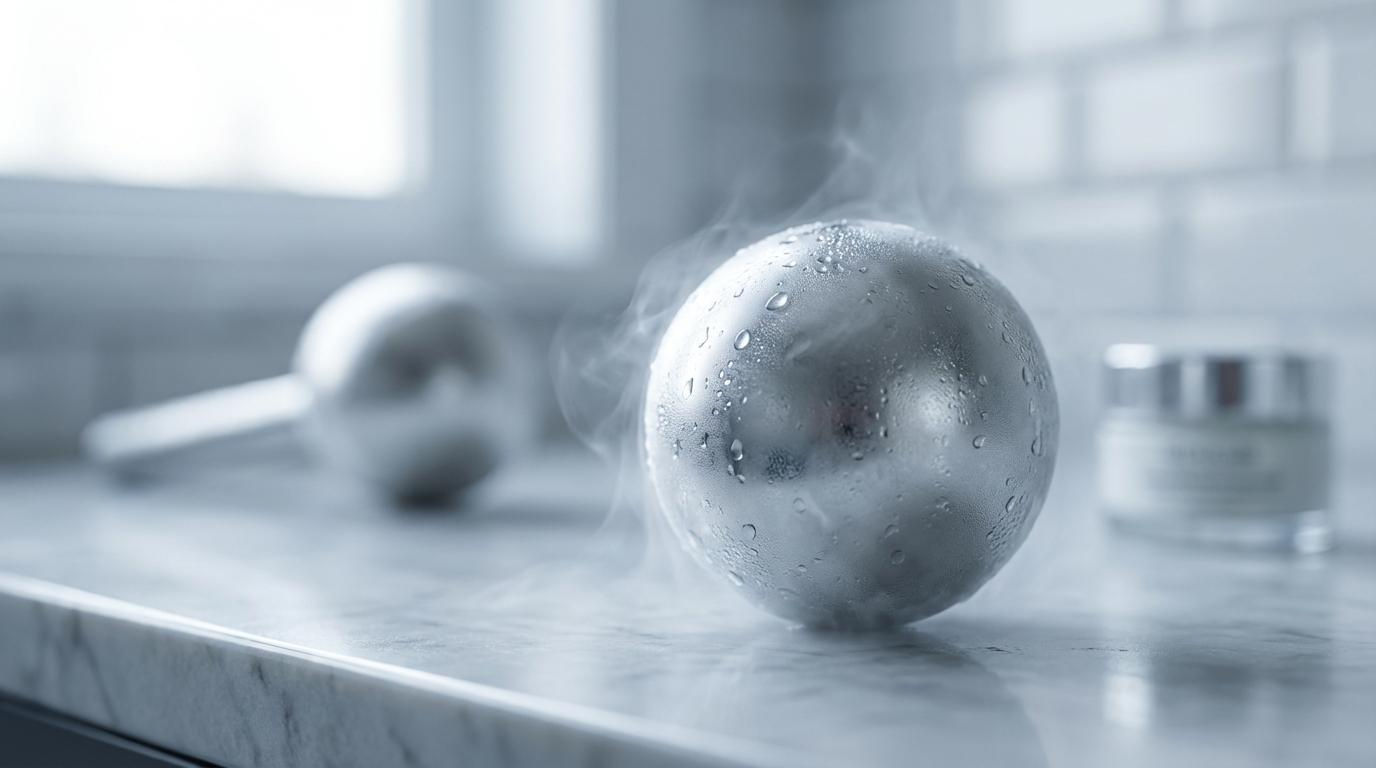
Cryotherapy Globes vs Ice Rollers: Which Is Better for Depuffing? Leave a comment
Morning puffiness can make even a strong skincare routine feel unfinished. You cleanse, moisturize, maybe apply caffeine serum, and your face still looks a little swollen around the eyes, cheeks, or jawline. That is why cold tools keep earning space in beauty fridges and bathroom drawers.
Two of the most popular options are cryotherapy globes and ice rollers. Both promise a fresher, tighter-looking face within minutes. Both can feel amazing at 7 a.m. And both are often marketed as if they can transform your face overnight.
They cannot do that, but they can help, and the difference between them is more about user experience than miracle-level results.
What cold tools actually do
Cryotherapy globes and ice rollers work through the same basic mechanism. Cold causes blood vessels to constrict, which can reduce visible swelling and calm temporary redness. The cooling motion may also support lymphatic drainage, especially around the under-eye area where fluid tends to collect overnight.
That is why both tools can create a fast depuffing effect. In many cases, the change shows up within minutes. Dermatologists often describe at-home facial cryotherapy as a quick cosmetic reset, not a long-term treatment. The effect is real, but it is short-lived, often lasting a few hours rather than all day.
This matters because it frames the whole comparison: if your question is which tool permanently changes facial puffiness, the answer is neither.
Where cryotherapy globes stand out
Cryotherapy globes usually come as a pair, often made from stainless steel or glass. They are meant to be chilled, then swept across the face in upward and outward motions. Because you use two at once, the experience can feel more like a mini facial than a quick beauty step.
That spa-like feel is a major reason people love them. Metal globes, especially, tend to hold a strong chill and deliver a firmer, weightier massage. On cheeks and jawline, that extra pressure can feel deeply satisfying. Many users say globes make the routine feel more intentional and luxurious.
They also cover facial contours beautifully. The rounded shape glides well across the cheekbones, temples, and forehead, and smaller globes can work nicely under the eyes when used gently.
Still, cryotherapy globes come with trade-offs. They are usually pricier than basic ice rollers, less convenient to handle, and harder to multitask with. If you are rushing through a workday morning, two chilled globes can feel like more tool than you need. Glass versions also demand care, since one bad drop can end the ritual fast.
Why ice rollers have mass appeal
An ice roller is much more straightforward. It is a single handheld tool with a chilled rolling head, often filled with gel or water, that you move across the skin with one hand. For a lot of people, that simplicity wins immediately.
It is easy to see why ice rollers tend to earn strong reviews. They are intuitive, quick, and usually less expensive. You can roll across under-eyes, cheeks, and forehead without learning a technique or committing both hands. If your routine is built around speed, an ice roller fits naturally.
The sensation is often a bit gentler too. Many rollers feel cooling without being intensely cold, which can be a better match for sensitive skin or anyone who dislikes that sharp first touch of metal straight from the fridge. That softer feel does not mean weaker results, at least not in a dramatic way. For everyday depuffing, rollers and globes are very close.
The downside is durability and cold retention. Lower-cost rollers may warm up faster, feel flimsy, or develop issues at the handle or rolling head over time. A great ice roller can last well, but cheap ones often announce their price.
Side-by-side: what changes in real use
When you compare the two tools on paper, the overlap is large. The differences appear once you think about how you actually get ready each day.
| Feature | Cryotherapy Globes | Ice Roller |
|---|---|---|
| Depuffing speed | Fast, often within minutes | Fast, often within minutes |
| How long results last | Usually a few hours | Usually a few hours |
| Cooling intensity | Stronger, often longer-lasting chill | Slightly gentler, may warm faster |
| Ease of use | Two-handed, more ritual-based | One-handed, very intuitive |
| Under-eye use | Effective, but can feel intense if very cold | Effective and beginner-friendly |
| Full-face massage | Excellent for cheeks, jaw, forehead | Very good, with more targeted control |
| Portability | Compact, but two pieces and sometimes heavier | Easy to pack and use on the go |
| Typical price | Higher | Lower to mid-range |
| Durability | Metal is durable, glass can break | Plastic models vary in build quality |
| Best fit | Spa feel, stronger chill, slower routine | Fast mornings, convenience, value |
Which one is actually better for depuffing?
If the question is pure performance, this is close to a tie.
Both tools reduce puffiness quickly because both rely on cold-induced vasoconstriction and fluid movement. There is no strong evidence showing that cryotherapy globes dramatically outperform ice rollers for routine facial depuffing. The visible result is usually comparable: less swelling, a tighter look, and a fresher appearance that fades later in the day.
Cryotherapy globes may feel more effective because they are often colder, heavier, and more immersive to use. That intensity can create a stronger sensory payoff. Your face feels very awake. The massage feels deliberate. On mornings when you want a full reset, globes can seem like the better tool even if the end result is only modestly different.
Ice rollers, though, have a compelling advantage that matters in real life: consistency. A tool that is easier to grab, easier to use, and easier to store often becomes the tool that gets used. And the tool that gets used wins.
Skin type, comfort, and routine all matter
The better pick can shift depending on your skin and how you plan to use it. Very dry or highly sensitive skin may prefer the milder, more controlled feel of a roller. Metal globes can feel too cold if they come straight from a very cold freezer or stay in one spot too long.
If your skin leans oily or acne-prone, both tools can feel great. Cold can temporarily calm inflammation, reduce surface oiliness, and make pores look tighter. That does not treat the root cause of breakouts, but it can give the skin a smoother, calmer look for a while.
Age also changes expectations. Cold tools can help with fluid-based swelling, but they do not lift sagging skin or reshape facial contours. If puffiness is mixed with loss of firmness, the result may be subtler. That is not failure. It is just the limit of what cold can do.
Morning use is where both tools shine brightest.
Who tends to prefer cryotherapy globes
Some people want more than utility. They want the skincare step to feel polished, calming, and a little indulgent. That is the lane where cryotherapy globes do very well.
- Choose cryotherapy globes if you want: a firmer, colder massage that feels closer to an at-home facial.
- Choose cryotherapy globes if you enjoy: a slower routine with both hands working across the face.
- Choose cryotherapy globes if you care about: premium materials and a more refined feel in the hand.
- Pass if you dislike: heavier tools, fragile glass, or higher prices for a similar cosmetic result.
Across shopper feedback, this group often praises globes for feeling luxe and effective at once. The common complaints are practical, not performance-based: too cold, a bit bulky, or harder to store.
Who tends to prefer an ice roller
Ice rollers appeal to a different type of user. They are less theatrical and more efficient, which is exactly the point.
- Quick morning reset
- One-handed use
- Travel-friendly packing
- Lower upfront cost
- Gentler cold sensation
- Easier learning curve
That convenience often drives stronger ratings. People like tools that slide neatly into real routines, not just aspirational ones.
Safe use matters more than packaging claims
Any cold tool can irritate skin if used carelessly. The goal is to glide, not freeze. Keep the tool moving, use light pressure, and limit sessions to a few minutes per area. If a tool feels painfully cold, let it sit out briefly before touching your face.
Sensitive, compromised, or very dry skin deserves extra caution. If your barrier is already irritated, intense cold can make things worse. Broken skin, active rashes, or severe reactivity are good reasons to pause and ask a dermatologist before adding facial cryotherapy to your routine.
Cleaning is not glamorous, but it matters. Wipe the tool down after each use, let it dry fully, and store it clean. A chilled skincare tool should feel refreshing, not questionable.
What shopper reviews tend to reveal
Online reviews paint a pretty consistent picture. Ice rollers usually attract more ratings and slightly broader appeal, largely because they are simple, affordable, and easy to fit into daily life. Cryotherapy globes tend to get praise for feel, finish, and a higher-end experience.
That difference is useful when you are shopping. A four-star globe and a four-star roller may not be competing on the same terms. One may be loved for luxury, the other for convenience. Reading reviews with that lens makes the choice clearer.
If you want the shortest path to less puffiness before coffee, an ice roller makes a strong case. If you want your depuffing step to feel like a beauty ritual instead of a task, cryotherapy globes are hard to beat. Either way, the smartest expectation is the same: a visible but temporary refresh, delivered fast, with the best results showing up when the tool matches your habits.
