
Best Smart Home Aesthetic Gadgets for a Minimalist Setup Leave a comment
Minimalist spaces are not anti-tech. They are anti-clutter.
That distinction matters when shopping for smart home gadgets. The right device should make a room feel calmer, cleaner, and easier to live in. The wrong one adds glowing plastic, extra cords, another app, and one more object asking for attention. A minimalist setup works best when technology fades into the room instead of competing with it.
The good news is that smart home design has matured. Many of the strongest products now look more like décor, furniture accents, or quiet architectural details than obvious gadgets. For shoppers who care about both style and value, that opens up a very appealing lane: pieces that feel premium, save space, and still land at a smart price.
What makes a gadget feel right in a minimalist home
A minimalist-friendly smart device usually shares a few visual traits: clean lines, restrained color, soft surfaces, and a small footprint. That could mean a slim floor lamp, a speaker wrapped in fabric, or a thermostat that looks like a simple wall accent instead of a control panel from another decade.
Function matters just as much as form. Minimalism is easier to maintain when one device replaces several others. A speaker that also works as a voice hub, a light that sets mood and schedule, or a curtain motor that removes the need for cords all help reduce visual noise. The best pieces do more while asking for less space.
A quick filter helps narrow the field before anything goes in the cart:
- small footprint
- neutral finishes
- diffused or indirect light
- quiet interfaces
- multi-use function
- hidden or minimal cabling
That last point is easy to underestimate. Even a beautiful gadget can lose its appeal once a bright cable drapes across a wall or shelf. In minimalist rooms, cable discipline is part of the design.
The standout categories for a cleaner setup
Some smart home categories naturally fit minimalist interiors better than others. Lighting leads the way, since it can change the entire mood of a room without adding much physical bulk. Speakers and hubs come next, especially when they double as audio systems and control centers. After that, thermostats, plugs, curtain motors, and discreet sensors create comfort in the background.
Here is a practical shortlist of devices and categories that pair strong utility with a refined look.
| Category | Why it works in a minimalist space | Strong example | Best fit |
|---|---|---|---|
| Smart floor lighting | Slim vertical form, ambient glow, sculptural presence | Philips Hue Gradient Signe Floor Lamp | Living room, bedroom |
| Decorative wall lighting | Reads like wall art when off, warm white lighting when on | Nanoleaf Elements | Living room, office |
| Smart thermostat | Replaces bulky wall hardware with a cleaner focal point | Google Nest Learning Thermostat | Entryway, hallway |
| Compact smart speaker | Soft materials and muted colors help it blend in | Apple HomePod mini | Bedroom, kitchen |
| Premium voice speaker | Strong sound, understated shape, fewer separate devices needed | Sonos One | Living room, office |
| Hidden automation | Out of sight once installed, removes cords and manual tasks | SwitchBot Curtain | Bedroom, living room |
| Quiet environmental sensor | Small, restrained, useful without drawing attention | Netatmo Indoor Air Quality Monitor | Office, nursery, bedroom |
What stands out here is how many of these products are solving visual problems while also adding convenience. The Hue floor lamp gives ambient light without demanding a bulky shade. Nanoleaf Elements can look like geometric wall décor even when off. A Nest thermostat turns an unavoidable wall device into something closer to a design object.
The less visible category deserves attention too. Smart plugs, curtain motors, and air sensors rarely get the spotlight, yet they can make the biggest difference in how “quiet” a home feels. They clear away switches, cords, and repetitive tasks without taking over the room.
Lighting usually gives the biggest payoff
If someone wants one upgrade that changes the mood of a space fast, lighting is often the best place to start.
A slim lamp with indirect light can make a room feel finished, even when the furniture is sparse. The Philips Hue Gradient Signe floor lamp is a strong example because it reads as a narrow vertical accent rather than a piece of tech. It is especially effective in corners, near media units, or beside a low-profile chair. You get atmosphere, app control, scheduling, and a cleaner look than a traditional lamp-and-shade combination.
Wall lighting can go even further. Nanoleaf Elements is popular in minimalist setups because the wood-look finish is calmer than the bright gamer aesthetic many smart panels lean toward. When arranged thoughtfully, the panels act like modern wall art with a warm, architectural feel.
This is also where many shoppers get the best price-to-style win. A lighting upgrade changes the room every evening, which makes it easier to justify than yet another gadget that lives in a drawer.
Audio and control without the “gadget” look
Smart speakers have come a long way from shiny cylinders that announce themselves from across the room. The best current options use fabric, rounded forms, and soft colorways that blend into shelves, consoles, and nightstands.
The HomePod mini works well in Apple-centered homes because it is tiny, subtle, and polished. Its mesh-covered sphere looks more like an accent object than a hub. For people who want stronger audio and wider platform flexibility, the Sonos One remains a standout. Matte black or white finishes, smooth edges, and solid sound make it easy to live with visually and functionally.
The strongest minimalist move here is consolidation. One good speaker that handles music and voice commands is better than a room full of small single-purpose devices.
Quiet automation is where minimalism gets smarter
Some of the best smart home upgrades are barely visible after setup. That is exactly why they fit minimalist interiors so well.
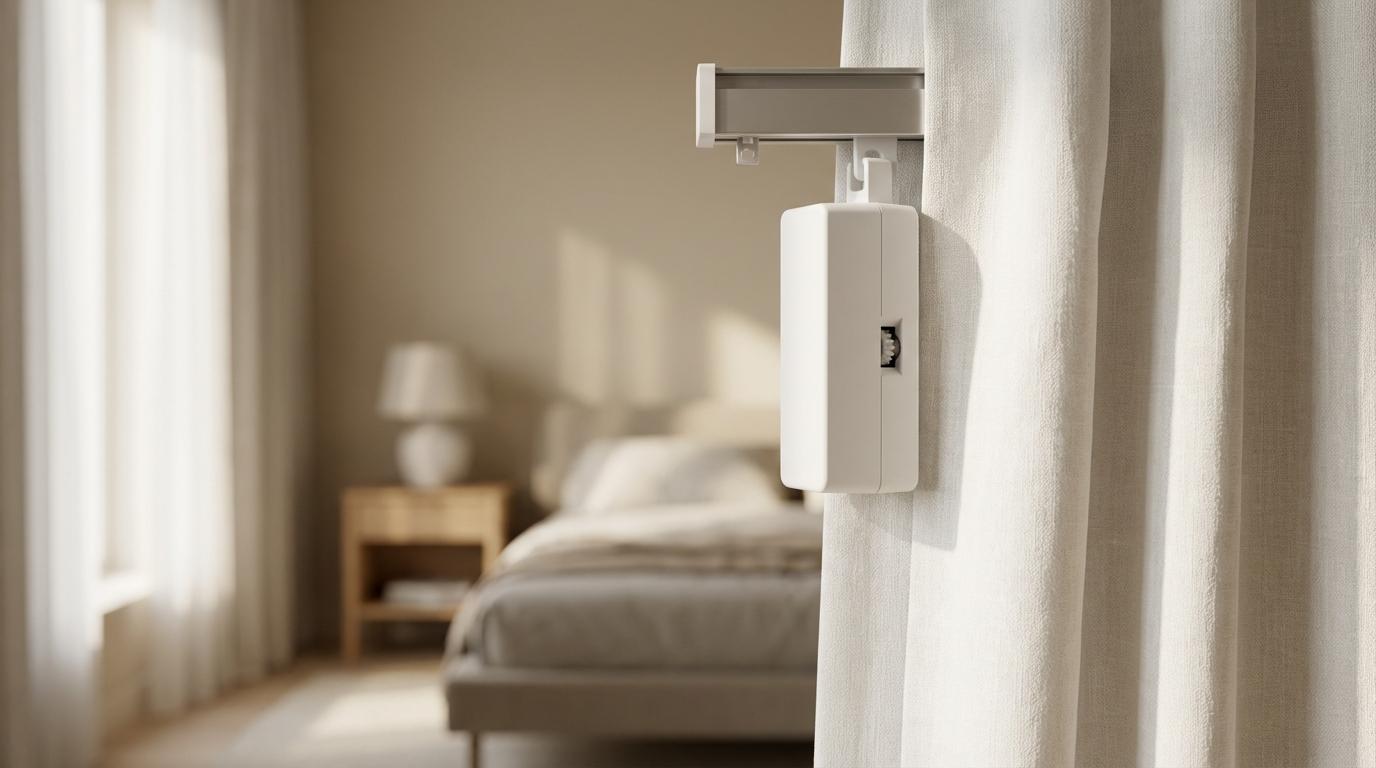
A curtain motor like SwitchBot Curtain stays tucked behind fabric and removes the need for dangling cords or manual pulls. Smart plugs sit behind lamps or appliances and add automation without changing the look of the item itself. In-wall switches, when chosen well, keep the wall surface clean while adding scheduling and scene control.
That kind of automation changes daily routines in a subtle way. Morning light arrives on schedule. Accent lamps turn on before sunset. The room stays orderly because the interaction happens in the background, not through a pile of remotes and adapters.
How to choose well, not just buy what is trending
A beautiful device on its own is not enough. Minimalist setups look intentional because the pieces relate to one another. Finish, ecosystem, scale, and placement all matter.
Before buying across multiple brands, decide what the room needs first. Better light? Better sound? More hidden automation? This keeps the setup focused and prevents the common mistake of collecting smart gadgets that never work together gracefully.
A few rules make the shopping process much easier:
- Finish: Match the device to wall color, furniture hardware, or existing accents.
- Function density: Favor products that replace two or three separate items.
- Ecosystem: Pick Apple, Google, or Alexa as the base, then build around it.
- Placement: Use corners, shelves, and textile cover to keep devices visually quiet.
- Cable discipline: Plan cord paths before installation, not after.
This is where curated shopping helps. A tighter selection saves time and lowers the odds of impulse purchases that look exciting on a product page but awkward in a real room. For deal-focused shoppers, the sweet spot is not the cheapest option on the screen. It is the product that looks expensive, works daily, and removes friction from the home.
Room-by-room ideas for a calmer smart setup
The best layouts often start with one anchor device in each space, then add support pieces only when they earn their place.
In the living room, a slim smart floor lamp paired with one quality speaker creates a polished foundation. Add a smart plug behind a media console, and suddenly the entire entertainment zone feels more controlled without looking more complex. If wall décor feels sparse, wood-finish light panels can add shape and warmth without breaking a neutral palette.
In the bedroom, restraint matters even more. A compact smart speaker, a soft wake light, or automated curtains can improve the entire morning routine while preserving the quiet feel of the space. This is also a strong room for warm, indirect lighting instead of ceiling-heavy brightness.
In a home office, visual calm supports focus. A clean desk, one ambient light source, and a small air quality monitor can make the room feel both sharper and healthier. If the setup includes tablets, chargers, and task lights, hidden cable management becomes part of the aesthetic, not just a technical detail.
A fast starting map can look like this:
- Living room: slim lamp, one premium speaker, hidden smart plug
- Bedroom: compact speaker, curtain automation, warm wake lighting
- Entryway: sleek thermostat, discreet camera, simple lighting scene
- Office: ambient wall or corner light, air monitor, cable-controlled desk zone
A few mistakes that can ruin the look
Minimalist smart homes do not fail because of one bad product. They usually drift off course through accumulation.
Too many lighting colors can make a calm room feel chaotic. Mixing three ecosystems often leads to extra hubs, extra apps, and extra frustration. Oversized speakers in tiny rooms upset the balance. Cheap plastic finishes can also stand out immediately, especially in spaces built around wood, stone, linen, or matte surfaces.
The smartest fix is editing. If a device does not blend in, save space, or improve the room every week, it probably does not deserve permanent placement.
Start with one quiet upgrade
There is no need to turn the whole home into a control center overnight. In fact, minimalist setups usually look better when they grow slowly.
Start with the category that gives the room the clearest return. Lighting is often first. Audio and voice control usually follow. Then come the almost invisible wins: plugs, switches, curtain motors, and sensors. As each layer goes in, keep the palette tight, hide the cables, and choose pieces that feel calm when they are not in use.
A well-edited smart home does not shout about how advanced it is. It simply feels easier, cleaner, and more considered every time the lights come on.
