
Beauty’s Growing Pains: What’s Making It Harder To Scale A Brand? Leave a comment
It is easier to launch a beauty brand today, but significantly harder to build one to meaningful, profitable scale. Product development, e-commerce and content creation have become more accessible, but that accessibility has also created an incredibly crowded market. Brands are competing not only for customers, but also for retailer attention, creator relationships, advertising efficiency and working capital.
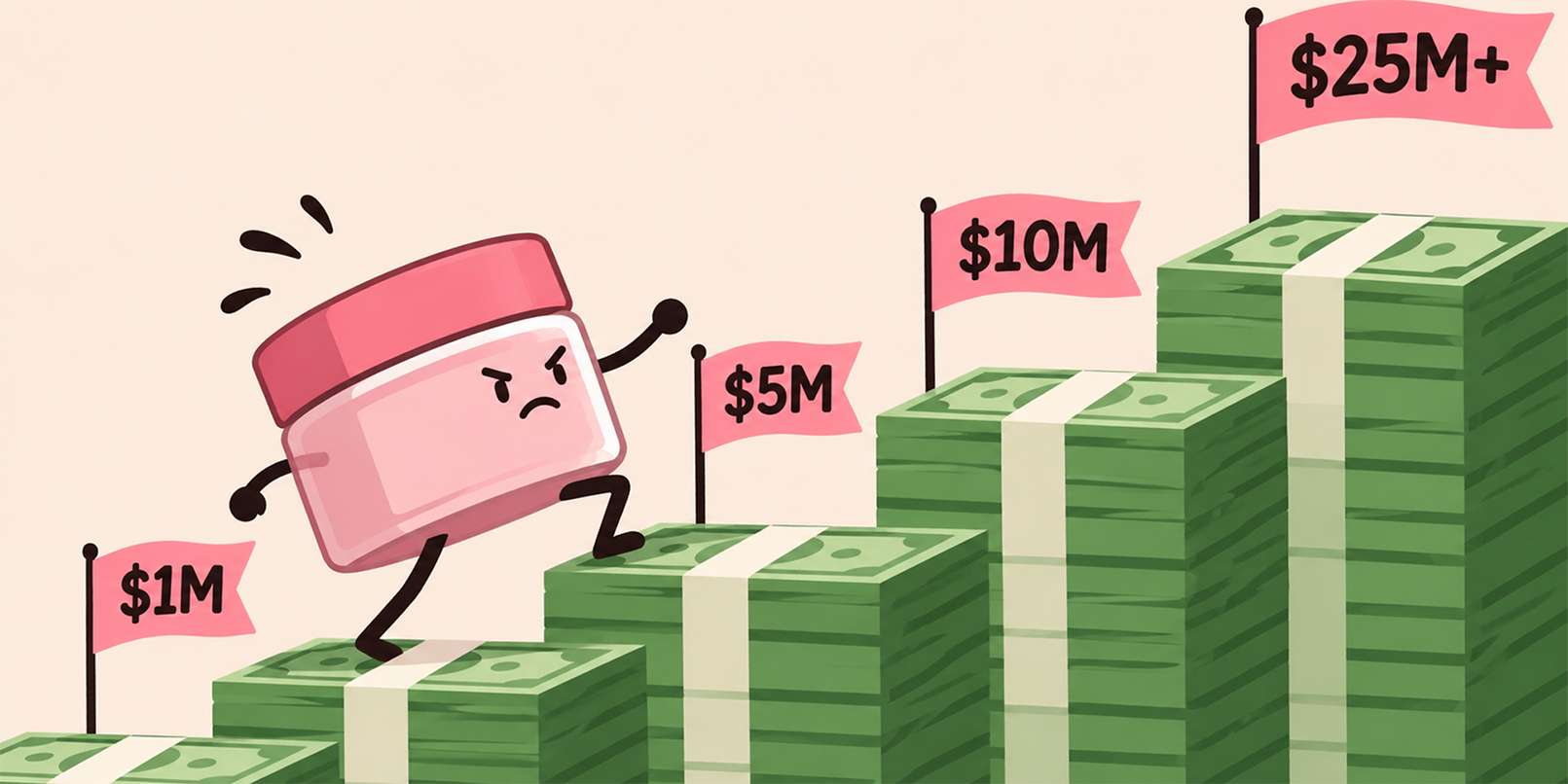
The first major barrier is reaching $1 million in annual sales. At this stage, founders must prove that demand extends beyond friends, early supporters or a single viral moment. The brand needs a hero product, repeat customers and at least one reliable customer acquisition channel.
It is possible to find manufacturing and supply-chain partners willing to work with lower minimums, but at this stage, it often comes down to relationships, relationships and relationships. Those relationships are built through industry credibility and a solid track record. When a manufacturer or partner agrees to reduce a minimum, extend better terms or remove another barrier, they are making a bet on the founder. They must believe that person can solve problems, create demand and ultimately grow the company.
The journey from $1 million to $5 million is often where a promising brand must become a fully functioning company. Founders need to establish systems, hire a capable team and finance larger inventory commitments, often well before the corresponding revenue arrives. Wholesale can accelerate growth, but purchase orders do not eliminate the need to fund production, freight, marketing, chargebacks and lengthy retailer payment terms.
Between $5 million and $10 million, operational complexity can increase faster than revenue. Brands may be managing several retailers and sales channels, each with different inventory requirements, margins, marketing investments and operational demands. A company can appear successful at the top line while experiencing significant cash constraints beneath it.
One underappreciated strategy is doing fewer things exceptionally well. A tightly edited assortment, a strong hero product and a clear customer proposition can be more valuable than launching continuously to satisfy an algorithm. Founders must also understand contribution margin by channel rather than treating every dollar of revenue as equally valuable.
Brands can break through by building multiple but complementary revenue streams, including direct-to-consumer, selective wholesale, corporate gifting, subscriptions, events and strategic partnerships. They should also consider a diversified funding stack that may include purchase-order financing, grants, strategic investment and revenue-based capital, not only traditional venture funding.
Having scaled my first beauty company into thousands of retail doors and now building my second venture, I believe the goal should not be distribution for distribution’s sake. It should be building enough consumer demand, operational capacity and financial resilience to grow without being crushed by the cost of expansion.
