
Best Skincare Devices for an At-Home Spa Routine Leave a comment
A satisfying at-home spa routine is not built on hype. It comes from choosing a few skincare devices that make sense for home use, fit your skin goals, and stay on the right side of safety.
That sounds obvious, yet the skincare gadget market is crowded with big promises. One device says it can clear acne, sculpt the face, fade scars, tighten skin, and replace a facial appointment in ten minutes. Another uses clinical language that makes it feel more official than it is. Smart shoppers do better when they separate relaxing rituals from true treatment categories.
Right now, the strongest official support for home use sits with visible-light LED devices. Microdermabrasion can also have a place in a routine, though it asks for more care. Microneedling is where the line gets sharper, and RF microneedling should stay firmly in a medical setting.
What makes a skincare device worth using at home
The best home skincare devices share a few traits. They have a narrow, realistic purpose. They come with instructions that are easy to follow. They do not ask consumers to act like clinicians in front of a bathroom mirror.
Results matter, but so does the type of result you are chasing. A tool that helps calm mild to moderate inflammatory acne has a very different risk profile from a device that punctures skin or uses radiofrequency energy. That difference should shape what earns a spot in your routine.
A good rule is simple: if the device sounds medical, treat it with medical-level caution.
Before buying, it helps to screen devices with a short checklist:
- Clear treatment goal
- Home-use approval or clearance language
- Realistic timing for results
- Sensible cleaning requirements
- Safety guardrails
- Claims that do not drift into fantasy
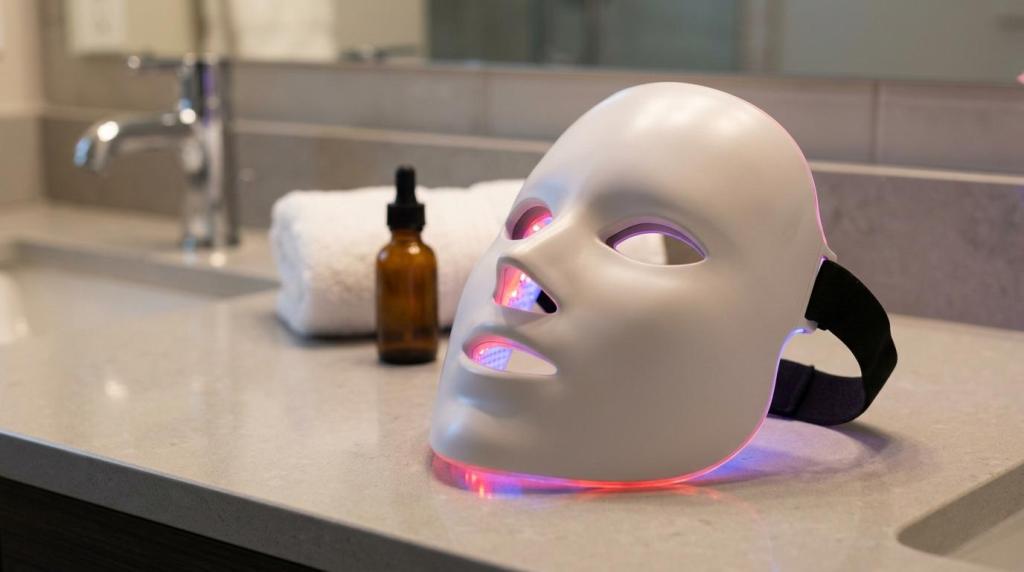
Visible-light LED devices are the strongest skincare devices for home use
If one category stands out for at-home skincare, it is visible-light LED. According to the American Academy of Dermatology, the FDA has approved some visible-light LED devices for at-home use, including blue, red, and blue-plus-red light devices. That official footing matters because it separates serious tools from trend pieces.
For acne-focused routines, LED makes the clearest case. Visible light can help treat pimples, especially when the issue is mild to moderate inflammatory acne. That is a meaningful lane for home care, especially for people who want a steady, low-friction routine without adding another harsh topical.
There is also an important limit here. The AAD notes that at-home LED devices are less powerful than the ones used by dermatologists. So the experience is usually gentler, and the timeline for visible improvement may be longer. That is not a flaw. It is part of why these devices can fit home use in the first place.
Just as important, LED is not a cure-all. Visible light is not considered effective for blackheads, whiteheads, acne cysts, or nodules. If those concerns are the main issue, an LED mask may still feel relaxing, but it should not be the center of your treatment plan.
| Device type | Best use case at home | What to expect | Key caution |
|---|---|---|---|
| Visible-light LED | Pimples and mild to moderate inflammatory acne | Gradual results with consistent use | At-home units are less powerful than in-office devices |
| Microdermabrasion kit | Texture refresh and a smoother-looking surface | Often works best as a series of sessions | Avoid if skin is irritated; use extra caution after isotretinoin |
| Cosmetic microneedling roller marketed for exfoliation | Surface exfoliation claims only | Very limited scope compared with medical microneedling | Product claims can blur the line between cosmetic and medical use |
| RF microneedling | Not appropriate for home use | Should be performed as a medical procedure | FDA says it should not be used at home |
How to use visible-light LED devices in an at-home spa routine
LED works best when the routine around it is calm and consistent. Clean skin, realistic expectations, and a repeatable schedule do more for results than stacking three other actives on top and hoping for a dramatic overnight change.
That also makes LED easy to fit into a spa-style evening. It can be the anchor step, followed by a simple hydrating routine and an early bedtime instead of a dozen conflicting treatments.
A practical setup looks like this:
- Before treatment: Cleanse skin, dry it fully, and skip irritating actives if your skin feels sensitized
- During treatment: Follow the device timing exactly and use any eye protection included by the manufacturer
- After treatment: Keep the rest of the routine simple with hydration and barrier support
- For consistency: Think in weeks of regular use, not a single dramatic session
Microdermabrasion devices can improve texture, but they need more restraint
Microdermabrasion sits in a different category from LED. It is a resurfacing step, which means it can leave skin looking smoother and brighter, yet it also asks more from the user. Done thoughtfully, a home microdermabrasion kit can support a polished, spa-like result. Done too often or on the wrong skin, it can tip into irritation fast.
The AAD notes that microdermabrasion often works as a series, commonly five to sixteen treatments. That point is easy to miss in marketing. People tend to buy a device expecting one impressive session, when the real payoff is usually gradual. After a series, patients often report smoother skin and a more radiant complexion.
That gradual pattern can actually be useful. It encourages a more measured routine, where texture care is planned rather than impulsive.
Caution matters most with skin that is already vulnerable. The AAD advises anyone who is taking isotretinoin, or has taken it within the past six months, to see a dermatologist before using an at-home microdermabrasion kit because the risk of complications, including scarring, is higher. Even outside that group, microdermabrasion is not a good match for inflamed, over-exfoliated, or freshly irritated skin.
Microneedling devices for home use need a much stricter reality check
Microneedling is where many consumers run into confusing marketing. The term gets used for everything from simple rollers sold for exfoliation to FDA-cleared medical devices that penetrate the skin. Those are not the same category, and treating them as if they are can lead to poor decisions.
The FDA says it has cleared microneedling devices to improve the appearance of facial acne scars, facial wrinkles, and abdominal scars in patients aged 22 years or older. Most cleared microneedling devices are pen-shaped, motorized, and designed to penetrate the skin in a way that changes the structure or function of tissue below.
That description should make one thing very clear: this is not casual spa tech.
The FDA also says it has not authorized any microneedling medical devices for over-the-counter sale. So when shoppers see dramatic collagen, scar-remodeling, or wrinkle-correction promises attached to a home device, skepticism is healthy. Some microneedling products that do not penetrate living skin and only claim exfoliation or cosmetic appearance benefits are treated differently from medical devices. Still, that regulatory difference does not turn them into a substitute for clinician-guided microneedling.
A smart way to think about the category is this:
- Cleared medical microneedling: Intended for acne scars, wrinkles, or certain scars, and not authorized for OTC sale
- Cosmetic rollers for exfoliation: Marketed more narrowly and generally kept at the surface level
- Consumer takeaway: If the claims sound clinical, the device probably belongs in a professional setting
- Risk mindset: More needle depth does not mean a better home routine
RF microneedling is not a home skincare device
There is one category that deserves a direct no: RF microneedling.
The FDA says RF microneedling is a medical procedure, not a cosmetic treatment, and the devices should not be used at home. It has also warned about serious complications reported with RF microneedling, including burns, scarring, fat loss, disfigurement, and nerve damage. These devices are Class II medical devices cleared through the 510(k) process, which tells you a lot about where they belong.
If a product tries to make RF microneedling sound like an upgraded self-care tool, that is your signal to step back.
How to build an at-home spa routine with skincare devices safely
A better home spa routine usually comes from editing, not adding. One evidence-backed device used consistently can beat a cluttered shelf of gadgets that compete with one another.
This is especially true if your goal is skin that looks calmer, clearer, and more even rather than aggressively treated. A home routine should feel restorative. It should also leave the barrier intact.
A simple device-based routine can look like this:
- Start with a gentle cleanse and a quick skin check.
- Use one device per session instead of stacking multiple treatments.
- Follow with a straightforward moisturizer or barrier-supporting serum.
- Keep frequency realistic and track how your skin responds over time.
There is also a shopping angle here. The best buy is not always the device with the most modes or the loudest promises. It is the one with a credible use case, transparent instructions, and a maintenance routine you will actually keep up with.
 Replacement heads, cleaning steps, eye safety guidance, and return policies matter more than luxury packaging.
For most people building a polished at-home spa setup, visible-light LED deserves the first look. Microdermabrasion can make sense for texture-minded users who respect the limits. Microneedling asks for a much higher bar, and RF microneedling does not belong in the home category at all. That kind of clarity makes it easier to spend well, use devices with confidence, and keep the routine feeling like self-care instead of guesswork.
