
What Makes a Power Bank Worth Buying in 2026? Leave a comment
A power bank used to be an easy purchase. Pick a size, glance at the price, toss it in the cart.
That approach does not hold up in 2026.
Phones charge faster, laptops rely on USB-C, wireless charging is no longer a niche extra, and many people expect one portable battery to cover a full day of movement between work, travel, errands, and downtime. A good power bank now has to do more than store energy. It has to deliver that energy efficiently, safely, and in a form you will actually want to carry.
Power bank capacity and usable energy matter more than the headline number
The first number most shoppers see is mAh, and it still matters. Capacity shapes how many times you can recharge a phone, whether you can top up a tablet on a flight, and whether a laptop charge is realistic or just wishful thinking.
But mAh is only part of the story. A power bank stores energy at its internal battery voltage, then converts that power to the voltage your device needs. That conversion creates losses. So a 10,000 mAh power bank rarely gives you a perfect 10,000 mAh of usable output. Build quality, voltage regulation, and heat control all affect how much of that stored energy reaches your device.
A huge battery is not automatically a smart buy.
For many people, the sweet spot sits between portability and usable output. If the pack is too small, it feels underpowered. If it is too heavy, it stays at home. That is why the best models in 2026 are not always the highest-capacity ones. They are the ones that match real use.
| Use case | Good capacity range | Output target | Best fit features |
|---|---|---|---|
| Daily commute | 5,000 to 10,000 mAh | 20W to 30W | slim body, single USB-C, light weight |
| Weekend travel | 10,000 to 20,000 mAh | 30W to 65W | dual ports, fast recharge input, compact design |
| Phone plus laptop | 20,000 to 27,000 mAh | 65W to 140W | USB-C PD 3.1, status screen, strong thermal control |
| Outdoor or emergency use | 20,000 mAh and up | 45W and up | rugged shell, bright display, weather resistance |
One more detail separates smart buying from impulse buying: watt-hours. Airlines focus on Wh, not just mAh. A pack near 100Wh, usually around 27,000 mAh at typical battery voltage, is often the practical upper limit for carry-on convenience. That makes the 20,000 to 27,000 mAh class especially attractive in 2026.
Charging speed, USB-C power, and port selection define real usefulness
A power bank is only as good as its output. High capacity with weak charging speeds feels outdated fast, especially when flagship phones, handheld consoles, tablets, and laptops can all pull serious wattage.
USB-C Power Delivery is now the baseline for a strong buy. The better models support at least 30W, while premium options push into 65W, 100W, or 140W territory. That changes the kind of devices a power bank can serve. A weak bank can rescue a phone. A strong one can keep a laptop alive through a meeting, a flight, or a long stretch away from a wall outlet.
Input speed matters too. If a large power bank takes six hours to recharge, convenience drops hard. Faster input over USB-C means the battery itself can refill in an hour or two, which is a major difference for frequent travelers and heavy users.
When comparing models, these numbers usually matter most:
- USB-C first
- fast input recharge
- 30W output: enough for many phones and smaller tablets
- 65W output: a solid match for ultrabooks and larger tablets
- 100W to 140W output: useful for bigger laptops, creators, and power users
Port selection also deserves a closer look than most product pages invite. One USB-C port is fine for basic use. Two USB-C ports are much better. USB-A still has value for older accessories, camera gear, and legacy cables, but it should not be the main attraction on a forward-looking model. The best setups in 2026 usually include two USB-C ports and, in some cases, one USB-A port as a backup.
Built-in cables can also be genuinely useful, not gimmicky, when they are sturdy and neatly integrated. A retractable or fixed USB-C cable makes a power bank more likely to be used, because it removes one more thing to pack.
Safety certifications, battery chemistry, and cycle life separate premium from risky
The fastest way to ruin a good deal is to ignore safety.
Power banks pack dense energy into a small space. That demands proper cell quality, stable thermal behavior, reliable control circuitry, and verified certification. In 2026, a good power bank should treat safety as a baseline, not a bonus feature buried in small print.
The strongest options include overcharge protection, over-discharge protection, short-circuit protection, temperature monitoring, and automatic power adjustment during heat spikes. Wireless models should also support foreign object detection. These are the quiet features that matter every time the pack is in a backpack, on a nightstand, or charging while you work.
Battery chemistry is also getting more interesting. Standard lithium-ion and lithium-polymer cells still dominate, yet premium products are starting to push denser and more durable designs. Newer approaches, including graphene-enhanced cells and early solid-state designs, promise faster charging, better heat behavior, and longer lifespan. That does not mean every cutting-edge label is worth paying for. What matters is whether the maker gives clear cycle-life claims and backs them with credible safety marks.
Look for these signals before treating any power bank as a serious option:
- UL, CE, or equivalent certification: baseline proof of electrical safety testing
- UN38.3: a strong sign the battery has passed transport-related testing
- real temperature monitoring
- clear wattage labeling
- published cycle-life claims
Cycle life matters more than many shoppers think. A bargain pack that degrades quickly stops being cheap the moment it needs replacement. A better unit can stay useful through years of regular charging, which changes the value equation in a big way.
Portability, travel rules, and physical design shape everyday satisfaction
This is where spec sheets stop telling the full story.
A good power bank should feel like it belongs in your routine. Weight, thickness, grip, finish quality, cable placement, and button layout all affect whether it feels polished or annoying. Even excellent internals can be dragged down by a clumsy shape or a display that is hard to read in bright light.
Portability in 2026 is no longer just about being small. It is about density. Shoppers want more power per ounce, thinner bodies, and designs that fit a coat pocket, sling bag, or laptop sleeve without turning into dead weight. That is why the best products often look restrained and simple, while hiding very efficient packaging inside.
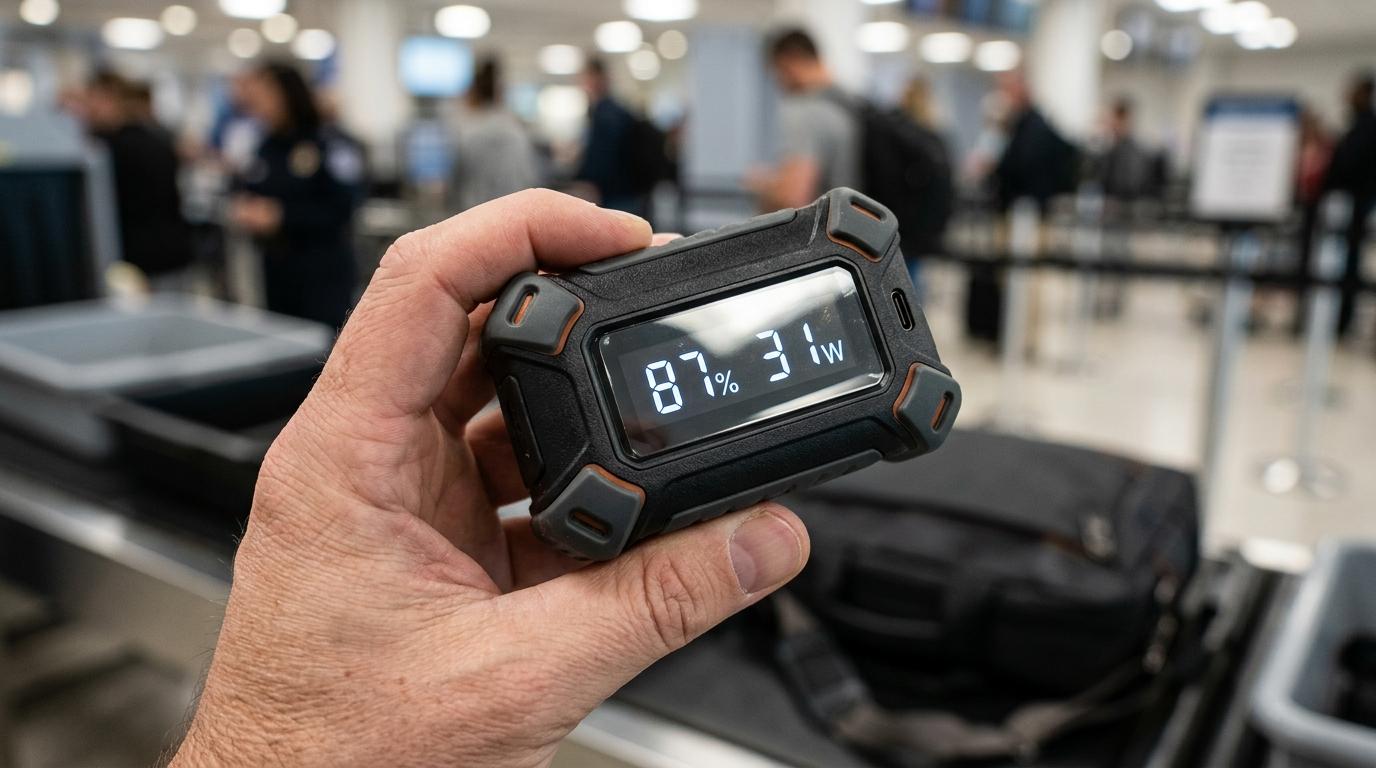
Travel adds another layer. Frequent flyers benefit from clearly labeled capacity, visible battery percentage, and airline-friendly sizing. A digital display that shows remaining charge and output can be surprisingly useful at airport security and even more useful when planning how much power to ration between devices.
Rugged construction can also be worth real money for the right buyer. A commuter may want a smooth aluminum or matte polymer shell. A camper or photographer may care more about corner protection, dust resistance, and a body that can survive rough handling.
Wireless charging and smart power bank features are finally practical
Wireless charging used to be a convenience add-on that felt slow and fussy. That is changing.
Qi2 and magnetic alignment have made wireless charging far more usable, especially for phones that support proper magnetic attachment. A power bank with magnetic wireless charging can be excellent for quick top-ups, desk use, rideshares, or crowded travel days when cable management feels like extra friction.
Still, wired charging remains more efficient and faster. That means wireless charging is best viewed as a flexible extra, not a substitute for strong USB-C output. A power bank that offers both gives you choice without forcing compromise.
Smart features are starting to matter as well, though only when they serve a real purpose. The useful ones include battery health tracking, temperature monitoring, output details on a screen or app, charge limit settings, and device-aware charging behavior. A bright, readable display can be more valuable than a flashy app if it helps you see wattage, remaining battery, and charging status at a glance.
Good smart features tend to share one trait: they remove guesswork.
Sustainability and price-to-value make a power bank worth buying, not just interesting
A good power bank in 2026 should feel current in more ways than one. That includes how it is made and how long it lasts.
Longer battery lifespan is part of sustainability. So are recycled materials, lower-waste packaging, efficient power conversion, and durable construction that reduces replacement frequency. Some models now lean into these details, and for many shoppers that matters. Not because it sounds good on a product page, but because wasteful electronics feel less acceptable every year.
Price also needs context. The cheapest model in a search result is rarely the best value. It may offer lower real output, slower speeds, weaker ports, poor thermal control, and a short service life. A more expensive model can be the better buy if it supports your laptop, recharges quickly, lasts years, and keeps its battery health much longer.
When judging value, it helps to ask a few direct questions:
- What devices am I charging most often: phone only, phone plus tablet, or phone plus laptop?
- How fast do I need the power bank itself to recharge: overnight is fine, or one-hour turnaround matters?
- Will I carry it daily: slim and light may matter more than maximum capacity
- Do I need travel safety and certification: important for flights, commuting, and regular use in a packed bag
That is where smart deal hunting becomes smarter product selection. A worthwhile power bank is not the one with the loudest spec headline. It is the one with the right mix of usable capacity, modern charging standards, proven safety, and a design that fits how you move through the day.
When those pieces come together, a power bank stops feeling like a backup plan and starts feeling like part of your setup.
