
An Ex-Urban Outfitters Beauty Buyer’s Proof-Of-Demand Strategy For Retail Expansion Leave a comment
Before starting the agency Mercenary Beauty, Alexzndra Sylvia spent a decade guiding Urban Outfitters’ beauty and wellness selection as a merchandise manager and buyer, witnessing firsthand how retailers lost their edge in discovery to social media platforms.
“The dynamic has flipped,” she says. “Retail used to validate brands and create demand, but now consumers are doing that first, and retailers are responding to it.”
Drawing on her merchant expertise, Sylvia, who was a member of the founding team at Birchbox before joining Urban Outfitters, where she expanded beauty and wellness to 250 stores and increased sales by more than 118%, is now helping emerging beauty brands become retail-ready with operational and financial modeling strategies, assortment audits and positioning deep dives. Mercenary Beauty largely works with brands generating under $10 million in revenue that haven’t launched in major retailers.
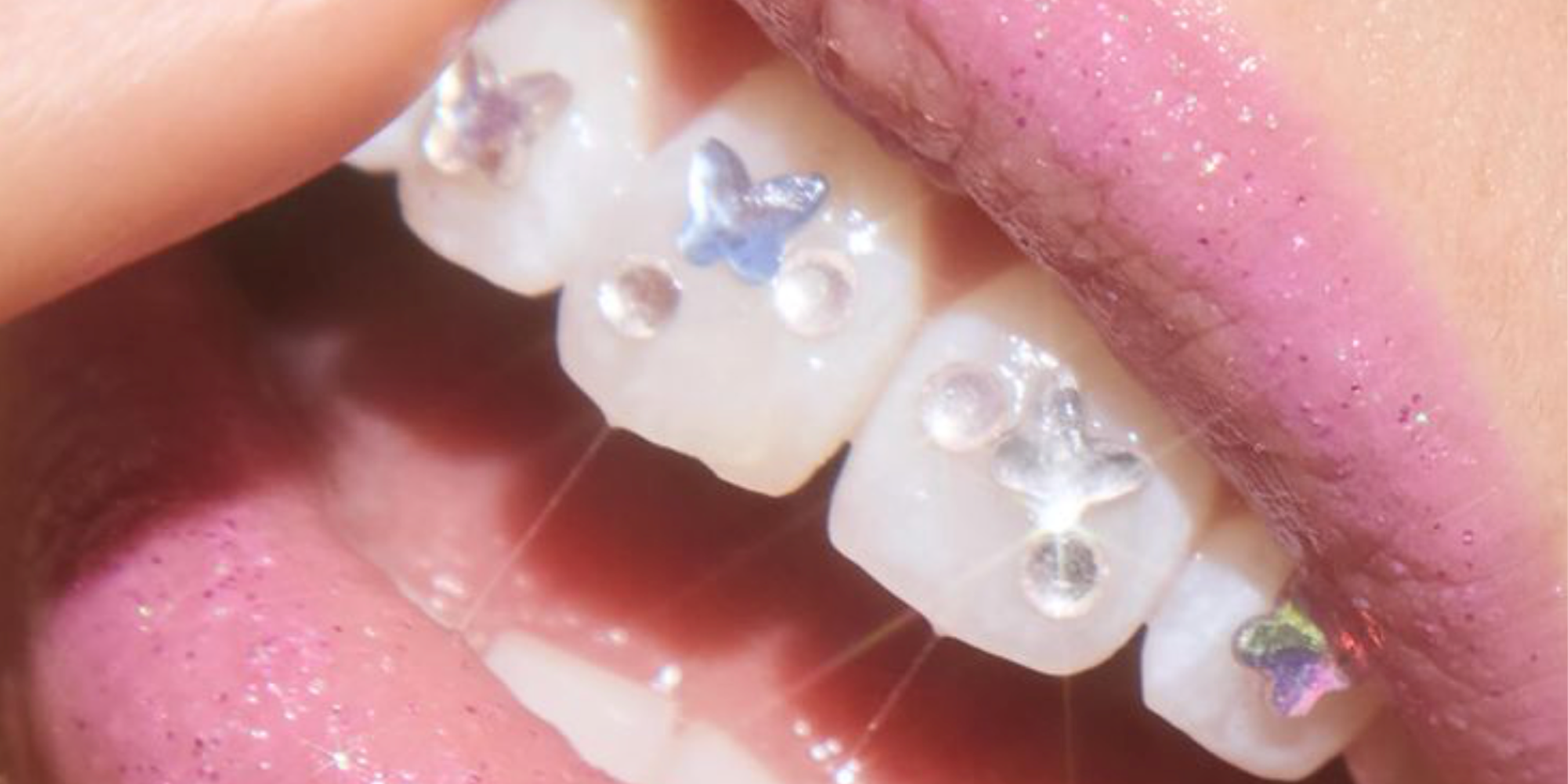
One of its clients is Never Have I Ever, a press-on nail, temporary tattoo and tooth gem brand that scored $150,000 from Kevin O’Leary in a “Shark Tank” episode that aired last month for 10% equity plus a 50-cent per unit royalty capped at $450,000.
Mercenary Beauty is an outgrowth of Mercenary CPG, a brand accelerator specializing in early-stage food, beverage and consumer lifestyle brands co-managed by Sylvia’s brother Adam Louras. Mercenary Ventures, the investment arm of the firm, provides capital to pre-revenue and seed-stage brands. Brands working with Mercenary Beauty don’t currently receive funding from Mercenary Ventures, although that could change in the future.
Beauty Independent spoke with Sylvia about Mercenary Beauty’s philosophy on scaling at stores, what’s trending at Urban Outfitters, how the role of retailers has shifted in the digital age and common mistakes brands make at retail.
What’s the formula for scaling at retail without completely losing your shirt?
The goal in retail isn’t finding the best store. It’s finding the right store at the right time. My formulation is very simple: it’s progression, not a moment. It starts with demand first. You have to have a strong DTC business, build your community and social presence. Then, it moves to validation through discovery retail, and then finally to scale.
You really have to take those stepping stones. You can’t just say, “I’m a new brand, and I want to be in Sephora.” You have to prove the demand, build the momentum and then you can scale.

When it comes to building digital demand, is there a magic number or metric that brands should hit before entering retail?
While retailers won’t specifically ask brands to share demand metrics on their dot-com, the metric really is about their social following and community. Your social following can be such an important signal. If you have 50,000 followers, there’s usually a strong correlation to your sales.
That said, even with a smaller following, say 12,000 followers, if they’re highly engaged and you’re consistently creating content, there’s a really good chance you have a community that’s ready to buy.
Beyond that, platforms like TikTok Shop give you tangible metrics. You can show conversion, repeat purchases and community engagement. With around 43% of sales happening online right now, those signals are more important than ever.
Who do you consider the top “discovery retailers,” and why should they matter to beauty brands?
The Urban Outfitters ecosystem is the blueprint for beauty discovery. They’ve leaned into taking risks on indie and emerging brands, and they’re very focused on finding first-to-market launches. We would literally troll social media to identify who just launched and who’s emerging.
That Urban, Anthropologie and Free People family is the first and most important tier of discovery, but there are others that matter. Bluemercury, Credo and Space NK are key players, and on the digital side, Revolve and FWRD are incredibly strong. Revolve in particular is powerful because of its influencer network and access to top content creators.
Then, you have newer global entrants like Olive Young and Sukoshi Mart, which are really moving the needle. Sukoshi Mart, in particular, is a game changer from a retail experience perspective. Every brand I speak to wants to figure out how to get in there.
There are also youth-focused retailers like PacSun, Tillys and even Old Navy entering beauty, which may not be the most prestigious, but can be incredibly strong homes for the right brand.
If a brand wants to get into Urban Outfitters, what should they know?
To get into Urban, you need to fit the customer demographic very clearly. You also need to show a clear gap fill in the merchandising assortment. If you’re coming to the table because you look like other brands they already carry, that’s not the answer. You need a strong merchandising story that fills a void.
Urban’s customer is what they call “coming of age,” typically between 16 and 22. So, brands need to be crystal clear on who their customer is and why they belong in that environment.
How quickly does Urban Outfitters cycle emerging brands in and out?
There’s no consistent benchmark for how quickly brands cycle in or out. Timing is highly performance-driven. That said, brands are typically in place for a minimum of about three months, while strong performers can remain in the assortment for many years, even over a decade.
On a product level, what worked the best at Urban Outfitters during your tenure?
From my experience, everything that helps the customer get ready and complete their look performs well. Nail has been a particularly exciting category. The weirder, the better. We’re not talking about simple colors, it’s got to be three-dimensional and crazy.
There’s also strong demand for glitter- and gem-based products across face and body, including things like tooth gems. College students are all wearing the same things, so the way they stand out and show their personality and differences is through how they glam.
Fragrance is another major category. Young consumers are obsessed with layering. I know Sabrina Carpenter’s fragrances absolutely killed it because everyone wants to look and be like her. I think having that trusted celeb following is really important.
What’s changed about the scaling process at retail since you were first a merchant?
In the past, founders were chasing distribution. They had a product and wanted to get it everywhere. Now, the focus should be on building the business first before scaling.
Scaling too early is truly a death sentence for a lot of brands. You learn so much just by getting your product into customers’ hands and gathering feedback. Fixing small issues early, whether it’s packaging or formulation, becomes much harder once you’ve produced at scale. There are simply more pathways today, and founders are increasingly approaching retail as a series of steps rather than a single end goal.
What’s changed about the role of the retailer, and what are the implications for beauty brands?
Early in my career, there were far fewer ways to discover emerging beauty brands. This was pre-Instagram and TikTok, when department stores and traditional retail were booming and played a much larger role in introducing newness. Today, discovery happens everywhere all the time, and brands are often built before they ever hit a shelf.
That said, retailers still play a massive role in brand building. I often describe it as: retail today isn’t one door, it’s a ladder. Because of this shift, it’s not about getting into any retailer. It’s about finding the right retailers who don’t just provide shelf space, but actively support brand building through merchandising, storytelling and customer connection.
Retailers today aren’t just offering shelf space. They’re acting as amplifiers of brands that already have momentum, with a much higher bar around differentiation, clarity of role and productivity.
How do social commerce platforms like TikTok Shop affect how brands scale?
Now, it’s not optional to have a TikTok Shop. That said, it’s not the only thing. It’s one of several pillars in a brand’s strategy. Retailers want proof of demand before making big commitments, and TikTok Shop is a strong way to demonstrate that. You can show conversion, repeat purchases and community engagement. I think that you have to nail it.
What are some of the biggest mistakes you’ve seen brands make when it comes to retail?
The biggest mistake is chasing distribution before building the brand, what I call “chasing the logo.” Overexpanding too quickly is also a major issue, and it can be a death sentence.
Another key challenge is not understanding the operational pressure of retail. Having a strong operational backbone is critical. When you scale into tens of thousands of units, things break, whether it’s production or packaging.
Packaging itself is another common oversight. You need a box that tells the story and sells the product on shelf. It’s just as important as the formulation. Really, brands need to be prepared across margins, forecasting and operations before entering retail.
When it comes to channel mix, a lot of investors want to see strong direct-to-consumer momentum, an Amazon presence and either a Sephora or Ulta presence when assessing brands for potential investment. What do you think about that?
It’s true that most investors are looking for a big retail logo attached to a brand. I’ve seen recently in conversations with brands raising capital that, if they’ve been around for a long time, like pre-COVID, it’s a really hard sell-in to investors. Investors want brands to get this viral moment, and they want to invest before it goes into the larger retailers. From helping brands, I would say you’re better off if you downplay how long you’ve been around or how long you’ve been in the space.
Also, investing in brands getting into a larger retailer is worth putting investors’ money into because they can guarantee that million-dollar purchase order. But I’ve seen brands who hit $3 million in sales from a small, emerging retailer that don’t have mass distribution, but have absolutely killed it within their channels and became a top five brand within a discovery retailer. Those are the brands that are much more appealing to investors, pre-scaled retail operations.
Once you’ve gotten into Target, you might need a little more money, but investors are a lot more excited before you get into a Target.
