
Sunset Lamp vs LED Strip Lights: Which Creates the Better Room Vibe? Leave a comment
Room lighting can change how a space feels faster than almost any furniture swap. A cold overhead bulb can make a stylish bedroom feel flat, while the right accent light can make the same room feel calm, cinematic, and expensive. That is why the sunset lamp versus LED strip lights debate keeps coming up in bedrooms, gaming setups, apartments, and home offices.
Both options are popular because they solve different vibe problems. A sunset lamp creates a focused, golden wash that feels intimate and photo-friendly. LED strip lights create a flexible layer of color or white light that can wrap around a room and shift with your mood. The better choice depends less on trends and more on what kind of atmosphere you want to live in every day.
Sunset lamp ambiance: what makes it feel so warm and cinematic
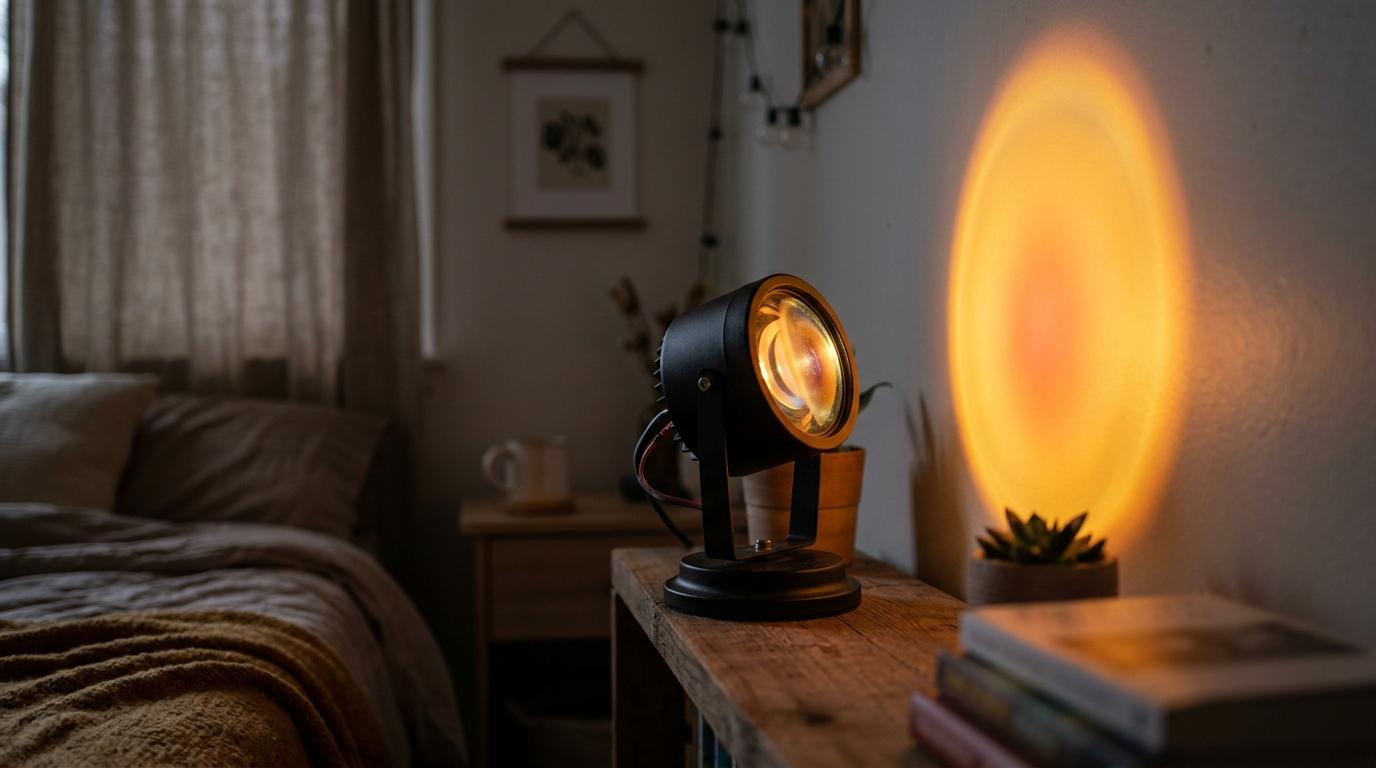
A sunset lamp is built to do one thing exceptionally well: project a rich, warm glow that looks like late afternoon sunlight. Most models stay in a very warm range, often around 2000K to 3000K, which gives walls and ceilings that orange, amber, or red-tinted look people associate with golden hour.
That warmth matters. Soft warm light tends to feel calming and intimate, especially in the evening. It is less about visibility and more about mood. A sunset lamp does not try to light an entire room evenly. Instead, it creates a visual focal point, almost like a piece of decor that happens to emit light.
It also produces a different kind of drama than standard lamps. Because the beam is directional, you get a circular glow, soft shadowing, and a more sculpted feel on walls, curtains, and furniture. In a small bedroom or reading corner, that can be enough to shift the whole energy of the room.
A sunset lamp works especially well when the goal is emotional impact rather than coverage.
After that first impression, its strengths are pretty clear:
- cozy bedrooms
- romantic corners
- mirror selfies and content backdrops
- soft late-night wind-down lighting
- compact spaces that need one strong visual moment
The trade-off is just as clear. A sunset lamp is not very flexible. It usually offers limited colors, lower brightness, and a localized effect. If you want one light to handle study time, cleaning, relaxing, and hosting friends, it may feel too specialized.
LED strip lights ambiance: why they dominate flexible room lighting
LED strip lights take the opposite approach. Instead of projecting one concentrated pool of light, they spread illumination across a longer path. That could mean under a bed frame, behind a TV, around ceiling edges, under cabinets, or behind a desk. The result is broader and more architectural.
This is where LED strips pull ahead for many people. Good strip lights can produce warm white, cool white, or full RGB color depending on the model. That means the same room can feel restful at night, bright during work hours, or playful during a party. If sunset lamps are mood specialists, LED strips are mood multitaskers.
Brightness is another big difference. A sunset lamp is generally an accent light only. LED strips can stay subtle, but they can also get bright enough to provide useful ambient light across a room. A five-meter strip can put out far more total light than a small projection lamp, especially if you choose a higher-density strip.
They also fit modern layouts better when you want the light source hidden. A strip tucked behind a headboard or shelf creates glow without adding another visible object to the room. That “light without lamp” effect feels cleaner and more custom.
That said, flexibility can work against them. RGB strips can look polished and refined, but they can also look harsh or gimmicky if the colors are too saturated or the installation is messy. A warm white strip behind furniture looks sophisticated. A badly exposed strip blasting blue around a bedroom at midnight usually does not.
Sunset lamp vs LED strip lights: side-by-side room vibe comparison
The biggest differences show up when you compare mood, scale, and control in one place.
| Feature | Sunset Lamp | LED Strip Lights |
|---|---|---|
| Core vibe | Warm, dreamy, intimate | Flexible, immersive, customizable |
| Color range | Usually warm orange/red with limited modes | Warm white, cool white, RGB, RGBW, millions of color options |
| Brightness | Low to moderate | Moderate to high |
| Coverage | Localized projection on one area | Broad coverage along walls, furniture, or room edges |
| Best use | Accent mood lighting | Full-room accent lighting and scene changes |
| Setup | Plug in and place | Measure, mount, connect controller and power |
| Portability | Easy to move | Usually semi-permanent once installed |
| Smart control | Limited on many models | Common on many kits |
| Energy use | Very low, often around 3 to 5 watts | Higher overall, often around 10 to 12 watts per meter |
| Best room size | Small to medium spaces | Small to large spaces |
If the question is which creates the better room vibe, the real answer is that they create different kinds of vibe. A sunset lamp gives a room personality fast. LED strips give a room range.
Room vibe goals: which light wins for cozy, gaming, work, and sleep
The easiest way to choose is to start with the mood you want most often.
A sunset lamp tends to win when the goal is cozy, romantic, or visually soft. It flatters walls, adds warmth to neutral decor, and instantly makes a space feel less clinical. It is especially strong in bedrooms, studio apartments, and corners that need atmosphere more than function.
LED strip lights usually win when a room serves more than one purpose. If your bedroom is also your office, if your desk is also your gaming setup, or if your living room shifts from daytime brightness to movie-night glow, strips make more sense. Their color control lets one space behave like several spaces. Karaoke Nights’ guide to home party lighting explains why simple scene presets and indirect strip placement keep color effects polished rather than gimmicky.
Here is a simple way to think about it:
- For cozy evenings: Sunset lamp
- For gaming and media walls: LED strip lights
- For small aesthetic corners: Sunset lamp
- For full-room perimeter glow: LED strip lights
- For flexible day-to-night scenes: LED strip lights
- For instant golden-hour mood: Sunset lamp
Sleep habits matter too. Warm, dim light usually feels gentler at night than bright, cool, blue-heavy lighting. That gives sunset lamps a natural advantage for wind-down routines. LED strips can also support better evening lighting, but only if you actually use warm settings and keep brightness under control.
Color temperature and emotional effect: why the light feels different
Not all “mood lighting” hits the same emotionally. Color temperature shapes how alert or relaxed a room feels. Very warm light, the type sunset lamps are known for, tends to feel restful and intimate. Cooler white light can feel sharper, cleaner, and more energizing.
This is one reason sunset lamps punch above their size. Even with lower brightness, the color itself sends a strong signal to your brain: slow down, settle in, relax. That makes them feel more atmospheric than their specs might suggest.
LED strips have more range. You can set them warm for bedtime, neutral for casual evening use, or cool white for focus. That adaptability is a major selling point, but it also means the final result depends on the user. A strip light is only as good as the scene you create with it.
A few lighting traits are worth keeping in mind:
- Warm tones: better for relaxing, reading, winding down
- Cool whites: better for focus, tasks, morning energy
- Saturated RGB colors: better for play, media rooms, parties
- Dimmed indirect light: better for comfort than direct glare
This is where many people get it wrong. They compare a carefully aimed sunset lamp to poorly installed strip lights running on bright default colors. In that setup, the sunset lamp almost always feels better. High-quality strip lights with warm scenes and diffused placement can look far more refined than cheap RGB tape pasted around a ceiling.
Installation, cost, and daily use: what matters after the first week
The sunset lamp wins on simplicity. You place it, angle it, plug it in, and the vibe is there. No adhesive, no measuring, no app setup unless you buy a smart model. For renters or anyone who likes to change layouts often, that ease is a real advantage.
LED strips ask for more effort upfront. You need to plan the placement, manage corners, hide wires, and decide whether you want the strips exposed or tucked into channels. That extra work pays off when done well, though. A clean strip-light setup can make a room feel designed rather than decorated.
Cost depends on how much lighting you need. A sunset lamp is usually cheaper if you only want one accent piece. LED strips give better value if you need several feet of illumination or want app control, timers, or multiple scenes.
Daily use tends to look like this:
- Sunset lamp: quick mood boost, low effort, single-purpose charm
- LED strip lights: more control, more coverage, more setup
- Best for renters: sunset lamp or short plug-in strips
- Best for permanent room upgrades: LED strip lights
Energy use is low for both compared with older lighting styles. Sunset lamps usually draw just a few watts. LED strips use more, especially across long runs, but the operating cost is still modest for most households when used as accent lighting.
Best room layouts for sunset lamps and LED strip lights
Placement changes everything.
A sunset lamp works best when it has a wall, ceiling corner, or curtain surface to project onto. It likes distance because distance lets the glow spread. Put it too close to a surface and the effect becomes small and less dramatic. In a bedroom, placing it behind a chair, near the bed, or low on a shelf can create a richer halo.
LED strips do their best work when the source is hidden and the glow is visible. Behind a headboard, under floating shelves, along a media console, or around ceiling coves, they can make a room feel larger and more layered. If the actual diodes are fully visible, the look becomes harsher unless you use diffusers.
If your room is small and already has enough main lighting, a sunset lamp may be all you need for mood. If your room is larger, oddly shaped, or used in different ways throughout the day, LED strips usually provide a better return.
Choosing the better room vibe for your space
If your dream room vibe is warm, dreamy, intimate, and visually soft, the sunset lamp is hard to beat. It has a focused personality that turns plain walls into a mood statement within seconds.
If your dream room vibe changes with the hour, LED strip lights are the stronger choice. They can go cozy, crisp, colorful, or cinematic without forcing you to buy separate lights for each mood.
For many rooms, the smartest answer is not either-or. It is layering. A sunset lamp can create the golden focal glow, while LED strips handle the background wash around a bed, desk, or TV wall. That mix gives a space both emotion and control, which is usually what people mean when they say they want a better vibe.
