
With Wellness Everywhere, How Do Investors And Retailers Spot Brands That Will Last? Leave a comment
As wellness goes practically everywhere and takes over practically everything, retailers and investors face a daunting needle-in-a-haystack challenge: identifying the few brands with the greatest potential.
The sheer number of products making wellness claims illustrates the challenge. According to McKinsey & Co.’s November 2026 Future of Wellness report, 33% of new consumer packaged goods launches through September in the United States carried health and wellness-related claims, up from 24% in 2021. Wellness is also prominent among high-growth brands. McKinsey found that 53% of the fastest-growing consumer packaged goods brands have a health and wellness proposition at their core, compared with 20% of moderately growing brands.
The management consultancy estimates the global wellness market has reached $2.7 trillion, including more than $700 billion in the U.S., and more than a third of American consumers say wellness is core to who they are. Health trackers, protein shakes, cold plunges, body scans and other markers of the wellness economy aren’t just tools for improving health. They’re becoming part of how consumers define themselves.
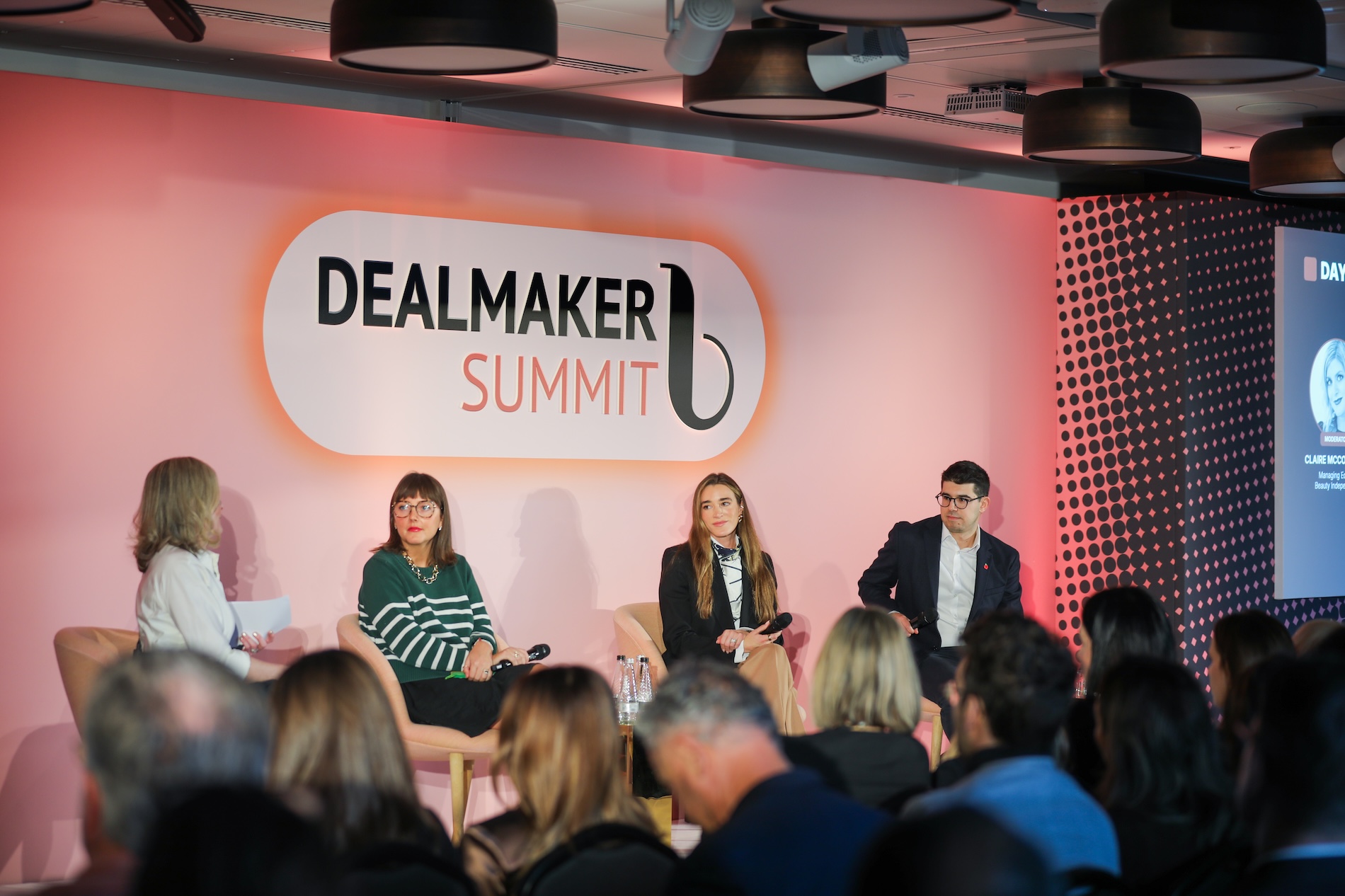
To get a better grasp of the amorphous wellness market and what separates promising brands from the pack, Beauty Independent brought together investors, brand founders and retail executives at its two-day Dealmaker Summit in London earlier this month. Their discussion explored what makes a wellness brand attractive to investors, how consumer expectations are changing and how retailers are meeting them.

What Investors Want From Wellness Brands
The question isn’t whether wellness is hot now, but which brands within it will stay hot. With the next surging brand always threatening to steal consumers’ attention, later-stage investors are especially cautious. They’re scrutinizing customer acquisition costs, repeat purchase rates and customer loyalty to determine whether consumers are momentarily infatuated with a brand or committed to it for the long haul.
Jeremy Zucker, director at investment bank Harris Williams, describes a “risk-off appetite” among later-stage investors and skepticism toward brands pitching themselves as hyper-scalers that will deliver 20% earnings before interest, taxes, depreciation and amortization (EBITDA) margins in three years. Cristina Nuñez, co-founder and managing partner at True Beauty Ventures, investor in Wizard Wellness, Norms, Biologica and Sleep or Die, says founders often confuse revenue growth with brand health.
Nuñez looks for first-order profitability or a customer acquisition payback period of just a few months. A 12-month payback, she says, “makes me incredibly nervous.” She adds, “You could definitely purchase your first order, but you got to earn the second one.”
Wellness consumables run out quickly, which Emily Bullman, principal at JamJar Investments, backer of Healf, Yepoda, Skin+Me and Béa, notes lets investors spot winners and losers faster than in categories like fragrance, but that shorter repurchase timeline also shrinks the window for investors to get in. She says, “We have to go earlier, be more uncomfortable with that, but really look for those absolutely killer teams.”
Beyond customer retention, investors weigh how much room a brand has to grow. Nuñez calls large total addressable market (TAM) figures “pretty meaningless.” Zucker contends that size still counts at the subcategory level, spotlighting collagen in the United Kingdom, a category he estimates at roughly 400 million pounds, or about $523 million. For a brand already generating 50 million pounds, or about $65 million, in annual sales, the issue is how much further it can grow. He says, “You’re selling it to the next investor, and then the next investor needs to have a story to sell on.”
Bullman thinks familiar ingredients can help brands break through those limits because mass consumers understand them. A cynic when it comes to wellness, she says, “Even I will try a collagen product because maybe it will work.” Nuñez counters that ubiquitous ingredients can be difficult for a single brand to own. Zucker looks for brands with the authority to branch out from the ingredient they initially launched with.
That ability to stand apart from competitors matters to potential acquirers, too. Zucker emphasizes strategic buyers ultimately want a competitive advantage, whether it’s clinical data, brand authority or storytelling. “They’re holding this for five, seven years,” he says. “It can’t be a viral marketing fad.”
Yet Grüns’ journey from launch to a $1.2 billion sale to Unilever in less than three years has upended assumptions about what strategic buyers want. “I thought [strategics] liked slower build brands that stick around a long time, and you have your Thornes, but then Grüns,” says Bullman. “And I thought they liked clinicals, but then Grüns. So who knows?”
Still, Nuñez stresses the importance of scientific evidence, pointing out that brands making general wellness claims face different substantiation requirements than those making specific health claims. But science alone isn’t enough. She says, “Sometimes the brands with the best science have no idea how to market themselves.”

Retail And Consumer Behavior
At Boots, shoppers no longer think in aisles, and wellness stretches across pharmacy, healthcare and beauty. A customer after better skin might buy collagen in wellness as well as a serum in skincare. “Customers are now outcome-led,” says Grace Vernon, director of international retail partnerships, trends and Boots Ignite, the retailer’s accelerator program to discover and fast-track emerging beauty and wellness brands. “They’re not category led. They’re thinking about sleep, they’re thinking of better skin, they’re thinking of better aging.”
Informed by customer behavior, Boots began testing wellness zones next to skincare in six stores and has expanded them to 30. It has trained 500 in-store advisors on wellness topics like NAD and perimenopause and hundreds of pharmacists in dermatology to help customers facing National Health Service (NHS) waits of more than a year to see a doctor.
Free skin scans and trichology appointments, including for GLP-1 users dealing with hair loss, round out the offerings. Vernon says shoppers are hungry for guidance on their own health data from wellness wearables. Seeing the popularity of wellness tech, Boots launched Oura late last year, garnering a waitlist of 26,000. “Data’s great, but if you don’t know what to do with it, it’s completely meaningless,” says Vernon.
Consumer interest in buzzy wellness ingredients brings its own complications. Searches for NAD on Boots’ website are up more than 200% year over year, and brands are rushing to incorporate it into formulas. Melisse Shaban, founder of Aramore, which sells NAD-infused skincare and supplements, explains that some precursors don’t penetrate skin. “When you dust it in, you’re playing a marketing game with the consumer,” she says. Still, Shaban believes in the ingredient’s potential. “This is not a trend ingredient,” she says. “This is the next retinol.”
Ova co-founder and managing director Katherine Lestage, whose fertility and pregnancy supplement brand launched at Boots two years ago, says wellness has allowed her to modernize a category long dominated by conglomerates selling through OB-GYNs and midwives. Ova’s fastest-growing product is its sperm support supplement, which she attributes to men taking greater ownership of fertility. Lestage says, “It’s actually products for them to help maintain healthy testosterone levels for longer [and] to help improve sperm quality.”
Brands are experimenting with formats to make wellness products easier and more appealing to use. Boots recently introduced K-Beauty wellness brands in jelly, tongue strip and powder formats. Lestage says gummy supplement technology has finally caught up to the high doses in Ova’s prenatal products, offering an alternative for women who can’t stomach capsules during the first trimester. “It’s about how the format helps the absorption of the ingredient, [and] how do you help the customer to actually enjoy using it so they keep using it?” says Vernon.

Breaking Taboos, Facing Barriers
As consumers become more comfortable discussing once-taboo health concerns, wellness brands are finding opportunities in categories like vaginal care, menopause and gut health. But gaining retail distribution and marketing those products remain difficult.
Joylux CEO Colette Courtion spent years being turned away by beauty retailers as she pitched the company’s red-light therapy device for vaginal health, arguing that vaginal tissue deserves the same care as facial skin. Joylux is now sold at Ulta Beauty and Walmart. “A vaginal care product is not taking away from a facial moisturizer,” she says. “It is adding to her basket.”
Marketing is another hurdle. Courtion says Meta restricts ads for menopause and vaginal health products, even as ads for erectile dysfunction and condoms run freely. Joylux has had to learn how to acquire customers profitably under those restrictions. “Imagine you are a skincare brand and you have a facial cream, and you can’t say it’s a cream, you can’t say it’s for the face and you can’t show a picture of it,” she says.
Boots, for its part, is embracing brands willing to tackle bodily functions without euphemisms. It recently put up in-store signage for gut health brand We Are Regular promising “the best poo of your life,” a slogan that gave the retailer’s legal team pause. “Times have moved on, it’s not a taboo anymore,” says Vernon. “Let’s talk about it all.”
