
Nocturnal’s Daniel Kiyoi Doesn’t Want To Cancel Yise. He Wants Brands To Think Hard About Inspiration. Leave a comment
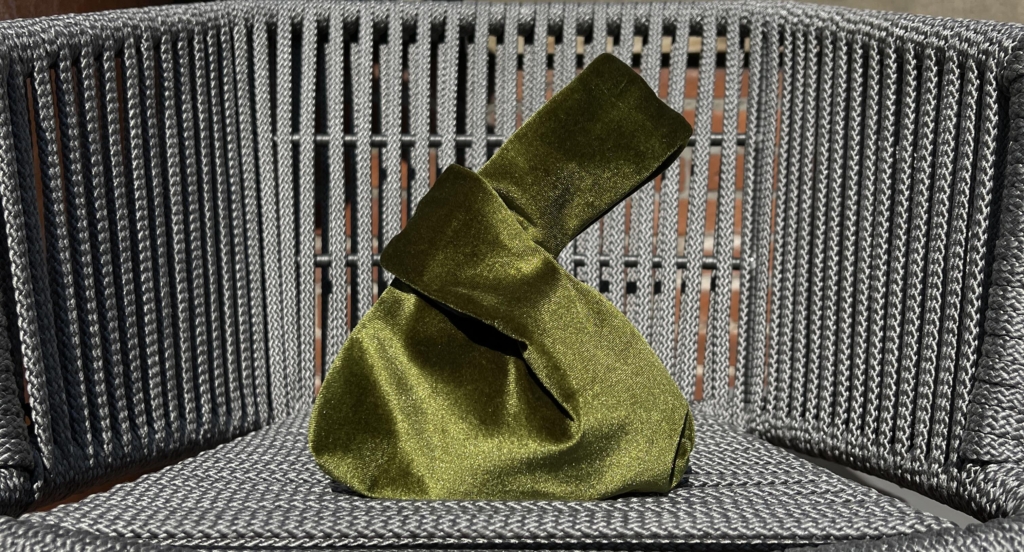
Daniel Kiyoi’s skincare brand Nocturnal didn’t invent the knot bag. The asymmetrical bag, which closes by threading its longer handle through its shorter one, draws on centuries-old Japanese wrapping traditions. What Nocturnal did was tie the knot bag to its raison d’être, drawing upon Kiyoi’s heritage as a fourth-generation Japanese American and the brand’s integration of Scandinavian design.
When Nocturnal launched its velvet version of the knot bag in 2024, it went viral, racking up more than 6 million views. Several months later, other brands launched knot bags, including Molly Sims’ Yise Beauty, then called YSE. So, when Sims posted a since-removed video on Saturday, Sept. 19 expressing disappointment that an undisclosed brand, revealed to be Bobbi Brown’s Jones Road, had used the product name Wide Awake after Yise, Kiyoi remembered his own experience.
In a video posted to Nocturnal’s Instagram account three days later, Kiyoi, co-founder of brand incubator Magic Dusk and former creative director at Tarte, recounts that he had connections to people working with Yise and had gifted Nocturnal’s knot bag to them. He expresses his disappointment at seeing the brand subsequently release a knot bag. (Others have raised different questions about Yise’s originality, noting that Dominique Cosmetics also has a product called Wide Awake and pointing to similarities between Yise’s Wide Awake and YSL Beauty’s Touche Éclat and between Yise’s branding and Nécessaire’s.)
But Kiyoi doesn’t end there. He explains his disappointment in the broader context of who takes inspiration from whom and how brands can responsibly create products.
“I’m not claiming ownership over Japanese design because I’m Japanese, and I’m definitely not saying that brands can’t take inspiration from Japan,” he says in the video. “I’m just saying do the work. Anyone can copy what something looks like. The real work is in understanding why something exists in the first place. Understand what you’re referencing and understand what the history of it is because inspired by shouldn’t be an excuse for not having an original idea.”
Beauty Independent wanted to keep the conversation going. In an interview with Kiyoi, we asked him why he went public with his experience with Yise, whether he’s heard from the brand, what constitutes copying and the factors driving it, the eye-patch grinder packaging kerfuffle that’s become part of the copying conversation (though he argues it’s about something else), his stance on dupes, his thoughts about accountability and cancel culture, and how he feels now that he’s spoken out.
What did you think when you saw Sims’ video on Wide Awake?
My first reaction any time someone claims copying is just to dive into it and figure out, do I feel like their claims are accurate? I try not to comment immediately when I don’t have a lot of information beyond whatever the person is saying in the video.
My reaction to that video specifically was she had copied me before, and it was interesting to see her talk about someone who was copying her. In my video, I stated really clearly that I had sent my bag to someone that was working with the brand, and it was very obvious to me. I didn’t want my video to be about that entirely. I really wanted it to be a conversation around copying in general in our industry and other industries.
How did you come to the decision to go public?
I’m connected to a lot of people on the brand side, and I want them to think about the inspiration they are pulling from in boardrooms, and the speed at which they are doing that. Obviously, in a digital world where we have access to practically everything, it’s easy to take a screenshot and have someone in a meeting say, let’s make something like this to improve sales.
But sometimes what ends up happening is that people are taking inspiration from things that have a very specific meaning—in my case, that meaning was cultural—where I don’t think it’s appropriate for someone to just dupe it because it’s cute or had gone viral. A lot of thought and research had gone into the knot bag to be as authentic as possible, and my brand is tied to Japanese and Scandinavian inspiration.
I really believe that the foundation of a brand that has longevity is a strong and authentic story, not just something that is trend-based. The conversation I want people to have is: Is there a line where copying becomes inappropriate? I’m not naïve. I know people copy, but the important thing is we need to slow down sometimes and really think about where we are getting our inspiration from.
I’m more optimistic than maybe I should be in terms of the people that are the originators will be the ones that prevail in the end because they will continue to originate ideas. My issue in this specific instance is that she made such a public statement about someone copying her, and I had really thought about the copying her brand did of a bag that had significance that it probably didn’t know the significance of. I thought that was important to add to the conversation.
I think this has been building over the past few years because there have been many dupes by other beauty brands of this knot configuration because they saw it went viral online. I don’t have as much a path to make a statement about those brands. The look and feel are very similar, and they hadn’t done anything like this in the past before until our bag went viral. I think you can connect the dots, but I haven’t gone public about any of those other brands that have copied the knot bag because I don’t feel I have enough receipts, and I don’t want to be attacked for not having enough information, but you can connect the dots when you see the images.
Did you take legal action?
I didn’t take any action legally. I don’t own the design. I am Japanese, and I think it’s an appropriate way to celebrate my culture. There’s a lot of gray area in beauty. For example, Tatcha’s founder is not Japanese, and she built her entire brand off a Japanese story. Flamingo Estate has been producing products inspired by Japan, and there have been some moments where I’ve thought this is in a gray area that makes me feel uncomfortable.
Bobbi Brown responded to Molly Sims’ video and announced on social media that her brand would rename its Wide Awake concealer. What did you make of her response?
I think that Bobbi is incredible. She’s mature and thoughtful, and I think her reaction showed she wanted to acknowledge that she didn’t copy intentionally, but that she was going to take action to fix it. I also will say that she didn’t need to do that. My opinion is that she didn’t copy Yise, and she did that to be really professional.
Have you heard from Yise?
I have not heard from Yise. I have heard from many people in the industry who appreciated the non-canceling tone of the video. It was really a conversation starter, not an attack, and I appreciated that people viewed it that way because that was really my intention.
I have been in the beauty industry so long that I’ve seen many rounds of canceling. I don’t believe in cancel culture. I believe in conversation starting, and I’ve seen a lot of conversation popping up about when is copying appropriate and what defines copying. That conversation is exactly what we need to be having.
What constitutes copying to you?
I’m not the arbiter of what constitutes copying and what doesn’t. To me, it’s less about copying and more about really honing in on your brand story, purpose, mission and foundation and having that be the center of everything you do. Step one is about: Is this something that is appropriate for your brand or is it something that’s popular online? That goes for marketing campaigns, product development and format, language and more.
I think it’s truly case dependent. I can’t give you a blanket statement on what is deemed copying. In this situation, I made it personal about my experience because it was a statement about copying me personally. It wasn’t a blanket rule.
Has the copying problem gotten worse?
I don’t think it’s gotten worse, I just think it’s gotten faster. Copying has been around forever, but because of the way things are spread online and the fact that there are so many brands now, the frequency has increased.
What do you believe happened with the eye-grinder packaging that’s been used by Wonder Bath, Fenty Skin, Glow Recipe, Huda Beauty and more?
From my perspective as a brand founder and product developer, your relationship with your vendor is very important. It’s important to have the conversation about exclusivity or understanding that they are selling this to other people. They oftentimes can’t give you exact details, but most of the time contract manufacturers will be able to tell you, yes, we have commercialized this with other people.
One of the first questions I ask when I see innovation is, has this been commercialized with other people? If they say yes, you won’t know who it is, but you as a brand have to say, does this still fit with our brand enough to be excited about it if we saw someone else coming out with the same thing? If the answer is yes, then you keep going. If you don’t think that, stop and do something else.
This is why I really believe in customizing every product personally. It can be hard because it’s a combination of formula and packaging innovation. If you are relying on a contract manufacturer to do innovation instead of bringing that innovation to them, you run the risk of other people having it.
Also, I really don’t think this is an example of copying. They all didn’t know they were doing it. It’s weird that people are bringing this into the copying conversation. It would be copying if one went viral and then someone else put out the exact same thing a year later.
Where does the battle of indie brands versus much larger brands factor into the problem of copying?
I think that is a tale as old as time. Indie brands, whether in beauty or fashion, have been copied. Indie brands really do a lot of work to figure out what can make them different because that’s their competitive edge. They don’t have enough money to cut through the noise, so they have to cut through the noise with innovation.
Bigger brands see that and maybe intentionally or not think, “Oh, this is a small brand. No one will see it.” They are not that threatened by the idea of taking ideas from an indie brand that is really small. Oftentimes, indie brands are formed by founders who have very specific tastes, and it could revolve around culture or their personal experience, and you can’t really replicate that because you are not them.
In a TikTok post, Charlotte Palermino of Dieux talks about the eye-patch grinder packaging issue showing the perils of keeping up with K-Beauty. Do you agree?
Everyone is trying to keep up with everyone else, not just K-Beauty. Does Korea innovate faster than most people right now? Yes. Does that mean they are the only ones that everyone is chasing? No, everyone is chasing everyone else. The overarching umbrella issue is the speed at which everyone is putting out product, which puts pressure on brands to release faster to capture the attention of a highly competitive audience.
At an event recently, someone commented that Sephora is the tail that wagged the dog in the eye-patch grinder matter. The retailer often identifies a trend and brands race to put out products that respond to it. Do you think that’s part of the equation that hasn’t been discussed as much?
I agree and also disagree with the tail wagging part of it. I agree that Sephora does big campaigns around certain products, and they give their brands data saying this is doing really well, we’d like to see something from you around it. There isn’t any secret about that.
I disagree because it’s up to the brand to determine what’s appropriate for that brand. Just because Sephora is telling you to innovate around something, it doesn’t necessarily mean you have to. Sephora needs to be flexible, too. Yes, they may want you to create something, but they are not going to penalize you if you don’t. For the customers’ sake, if everyone is doing the same thing, it doesn’t really serve the purpose of having different brands with different stories. Then, you might as well have one big brand.

In the end, all the brands involved in the eye-patch grinder hubbub may win.
I do think they are going to win, and it’s because the brands really embraced it and made it positive and fun. The product is really cool and innovative, and the brands have made it entertaining. Beauty should be fun.
And that’s why I don’t believe in cancel culture. I believe in keeping people accountable and having a conversation, but I ultimately believe beauty should be exciting and fun, and there’s a space for everyone to have their own products and brands.
Where do you stand on duping?
I don’t love it. I think it’s almost the reverse of what we are talking about with big brands copying indies. Maybe new and upcoming brands are copying brands that have been around for a long time that have hero products that are beloved, and they are selling them at a lower price point. You are building your business off someone else’s innovation.
But it can be difficult to tell if even the duped brand truly innovated.
Brands will take innovation from contract manufacturers. Contract manufacturers are doing tons of formulation and packaging work, and a brand can take that and put it into their assortment. But I’ve worked with enough packaging and product developers to know that, at certain brands, there are people who do a lot of the work. They relentlessly challenge a contract manufacturer to realize their vision.
The general consumer doesn’t know there are many different paths to market. Yes, there is a lot of duping and copying. Someone will bring a benchmark to a contract manufacturer and maybe change one ingredient. Then, there are people who are truly making something from a need. Dupe culture is complicated just like copying is really complicated.
Are you glad you went public about your experience with Yise?
I’m very glad that I took it public. For me personally, it was important to stand up for something that was really intentional for my brand, and I’m happy that it fueled a more positive direction for the conversation. People are trying to assess what’s right and what’s wrong. If I hadn’t gone public with my experience, none of those conversations would be happening. I’m proud I said something.
