
Sarelly Projects $15M In Sales This Year As It Goes From Mexico To The World Leave a comment
French-born beauty executive Rémi Martini spent more than a decade inside LVMH Moët Hennessy Louis Vuitton, L’Oréal and Coty before a move to Mexico City in 2014 reordered his priorities. He fell for the country’s culture, food and creativity so completely that he made it his mission to bring Mexico to the world.
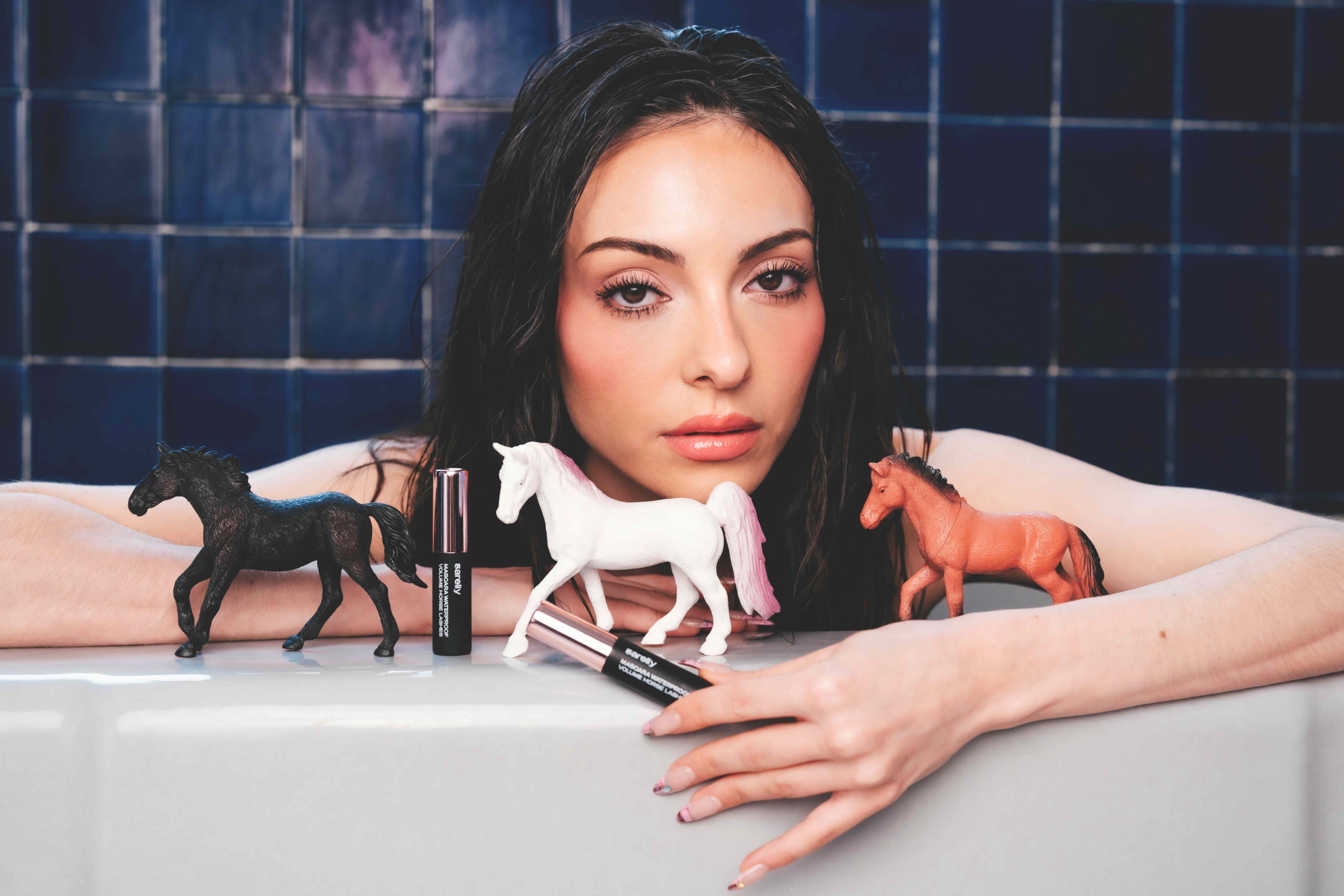
That mission found its vehicle in Anna Sarelly, one of Mexico’s original beauty YouTubers, whom Martini met when she was a client of Coty. Together, they founded Sarelly in 2022, initially selling cactus leather bags because, as Martini puts it, “no one was giving us money” to launch makeup outright. By the end of 2023, Sarelly had entered makeup, and its Cow Lashes Mascara became a runaway hit, nabbing the No. 1 mascara spot in Mexico across Sephora, Ulta Beauty Mexico, Costco and TikTok Shop. (The mascara is named for the Spanish phrase “pestañas de vaca” that Latina grandmothers use to describe long, thin, downward-growing lashes.)
Sarelly hasn’t slowed down since, and Martini projects the brand will generate $15 million in revenue this year, split roughly $10 million in Mexico and $5 million in the United States. The brand has raised $7.5 million in total across a pre-seed round, a $3 million seed round in 2025 and a bridge round this year that pulled in investors including Silas Capital, the firm that’s backed Glossier, Makeup by Mario and Ilia, Siddhi Capital and Pentland Ventures.
This month, Sarelly became the first Mexican beauty brand to launch at national scale in the U.S., rolling into more than 600 Target stores as part of Target Beauty Studio. The road to get there wasn’t smooth. Vendors were paid late, the brand ran into regulatory complications with its packaging, and Martini had to cover payroll out of his own pocket to keep the company afloat while the Target rollout came together. Through the challenges, he remained focused on Sarelly’s larger goal: making Latina beauty consumers the starting point rather than an afterthought.
In a conversation with Beauty Independent, Martini discusses building Sarelly from Mexico City, the fundraising path that got the company into Target, the operational chaos of a nationwide retail launch and why he believes identity alone won’t be enough to win U.S. shoppers.
What gap in the market made you believe a Latina-focused beauty brand was needed?
The Latina beauty consumer is the fastest-growing consumer in the Americas, especially in the U.S. A lot of brands adapt to Latinas—Rare Beauty doing a collaboration with Tajin, E.l.f. doing a Super Bowl telenovela—but they’re not creating from a Latina point of view.
We wanted to reverse that process. We believe the Latina deserves a brand that starts from her unmet beauty needs and engineers performance from there, rather than a brand designed elsewhere and adapted to her afterward.
Why did Sarelly start with fashion accessories instead of makeup?
It’s easier to launch fashion. I worked at LVMH, and personally I have a fetish for bags. I collect them. I told Anna, my co-founder, “Let’s show the world we can get to a million dollars in revenue, be profitable and prove we can build something together by leveraging your audience.”
Anna is an industrial designer, so she built a bag as a challenge for herself, but from day one, we already had a makeup product team in place. The bags were always meant to be a way to test the waters, build an audience and learn before we launched the real business.
How did Cow Lashes Mascara become the product that defined the brand?
We co-create all of our products with our audience. We listened to them on TikTok Shop and Instagram. Latinas were telling us, “I have long, thin lashes that grow downward.” We engineered the first mascara built to hold a curl all day: waterproof, drama-proof, toxic-boyfriend-proof, whatever you go through in a day.
We called it Cow Lashes because it was the only honest name for it. It became viral, and today it’s one of the most iconic products in Mexican beauty. It’s also apparently the No. 1 SKU at Target Beauty Studio.

When did you fundraise?
We were self-funded for a long time. The first time we raised outside money, we were already profitable and making more than $1 million in revenue. We bootstrapped the bag business, launched the makeup line at the end of 2023 and used those early results to raise a pre-seed, friends-and-family round in 2024.
Who took the first real bet on Sarelly as an investor?
No VC was interested except one LA-based firm, Sandbox Studios, which focuses on celebrity-backed brands. They were the first to really bet on me. With that pre-seed round, we launched into Ulta and Sephora in Mexico in 2025, and with an Ulta deal already in hand, I raised a $3 million seed round.
What drove this year’s bridge round, and why did investors like Silas Capital finally look at a Mexican brand?
With a Target deal in place, I raised a bridge round this year, primarily working capital for production financing to fulfill Target’s orders. It’s not the most healthy or scalable way to fund a business because the more you grow, the more equity you give up. But it was the only path available to us at the time.
Target has since started helping us access inventory financing instead, which is a better way for a B2C company to fund production than continuing to raise equity. As for why firms like Silas are looking at Mexican brands now, I’ve been talking to them for years, and they wouldn’t look at us before.
I don’t want to put words in their mouths about why that’s changed, but we now have a U.S. retail presence and a lead investor in Mexico who bet on us early even though they normally invest in AI and software. I think that combination made the opportunity visible to investors who couldn’t see it before.
How did the Target deal come together?
We talked to several retailers, and Target embraced the higher purpose behind what we were building. Kevin Wong, Target’s VP of beauty, sold me on the opportunity before I could fully see it myself. At the time I was selling a $24 mascara at Ulta and couldn’t picture where we’d fit next to $6 mascaras at Target.
About a year ago, when he couldn’t disclose anything yet, he told me there was an opportunity for us that Target had never seen before. Mariam Kocharian, Target’s buying director for color cosmetics, has been just as involved. She reviewed every piece of packaging and copy herself, and she still comments on our social posts and checks in with me almost daily. It’s a $100-billion-plus company taking a bet on something no other big specialty retailer has taken before.
What was it like operationally to scale into more than 600 stores at once?
It exploded everything: my vendors, my mental peace, all of it. We delivered some things late. We ran into regulatory issues with some of our packaging, so we had to start over, reformulate and rebuild our secondary packaging and fixtures. Sephora Mexico is 60 doors, and Sephora paid for our fixture the first year. This time, we had to build a fixture at a completely different scale ourselves.
There were moments we couldn’t pay vendors on time or even employees, and I would lend the company money personally. The well-being of my team has always been the priority. Target knew what we were going through and worked with us. I was scared the first time I walked into their Minneapolis headquarters. I thought they’d eat us alive. Instead, they took us under their arm.

You’ve said identity alone won’t be enough to win in the U.S. What do you mean by that?
In Mexico, our identity was enough. We didn’t have to justify our reason to exist because no brand had approached the market from a genuinely Latina point of view before. In the U.S., Latina consumers already know beauty deeply.
They spend more on beauty than other groups, by our data, and they don’t need us the way the Mexican market did. Identity and content are still our biggest strengths, but the U.S. is a performance-driven market, and we have to back up our claims. That meant reworking some of our formulas specifically for U.S. testing and substantiation standards.
How central is content to Sarelly’s growth strategy?
We don’t treat content as advertising. We see ourselves as a platform bringing Mexico to the world, and the best way to do that wasn’t just through products made in Mexico. It was through bringing the telenovela format to the world. Our original short-form series, Drama en la Chamba, has generated more than 40 million organic views this year across TikTok and Instagram. No brand is achieving that through paid media alone.
What’s next for Sarelly, and would you raise again?
We know how to bootstrap and can run this business profitably, but at this stage, I think a company like ours has bigger opportunities in front of it. We already have interest from global retailers. We’ll be launching with a major prestige retailer elsewhere in Latin America that I can’t name yet because it’s confidential.
We believe our purpose is bigger than Mexico. If we understand how to unlock the unmet needs of Latina consumers, we have to speak to the whole continent. We’ll likely raise again next year, but only around real opportunities. We’ve been a profitability-focused company from day one.
I’m not here to get rich selling makeup. I’m here to prove that beauty’s next major player can come from Latin America, and that we can build a global company out of Mexico City.
